Why Does Concrete Crack in California? Causes and Prevention
Noticing hairline fissures or major cracks in your patio, walkway, or driveway? If you are wondering why concrete cracks in California, the answer usually lies in California's unique combination of expansive clay soils, rapid thermal swings, and subtle ground shifts. The good news is that most concrete cracking is understandable, predictable, and largely preventable when the work is done right. Understanding why concrete cracks helps you tell the difference between a harmless cosmetic line and a sign of a deeper problem, and it helps you plan a project that holds up for decades.
This guide breaks down the real reasons concrete cracks in this region, explains which cracks matter and which do not, and lays out the practical steps that keep cracking to a minimum. The causes are rooted in soil, weather, and concrete chemistry, and each one has a corresponding prevention strategy that an experienced local crew applies as a matter of routine.
The Short Answer: Cracking Is Common, and Mostly Preventable
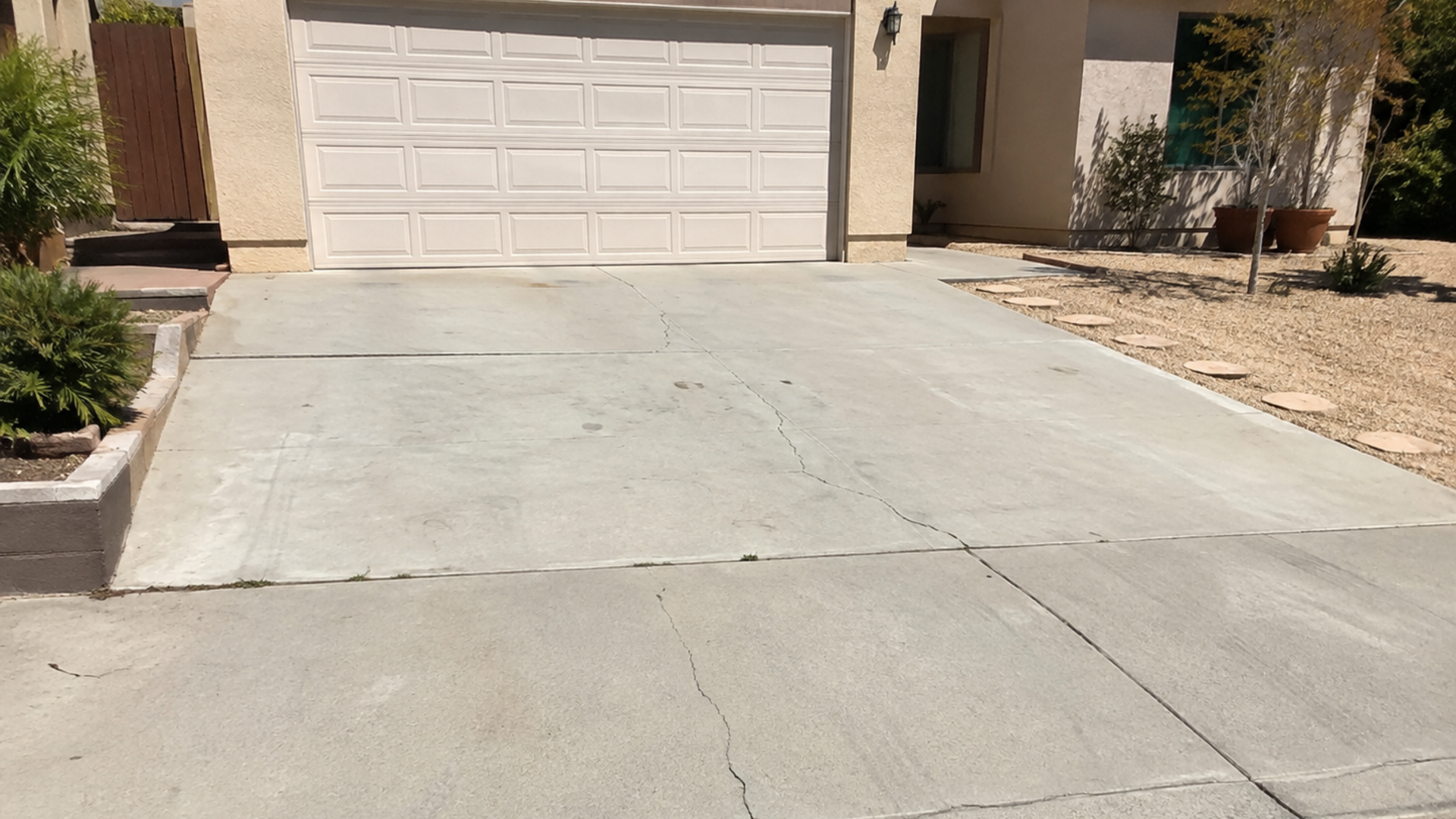
Here is the honest starting point: nearly all concrete develops some cracking over its life. Concrete is strong in compression but relatively weak in tension, so when forces pull it apart, whether from shrinkage, temperature change, or soil movement, fine cracks can form. That does not mean your slab is failing. It means concrete behaves the way concrete behaves.
The goal of good concrete work is not to eliminate cracking entirely, which is not realistic, but to control it. Proper preparation, the right mix, well-placed joints, and careful curing keep cracks small, planned, and cosmetic rather than large, random, and structural. Most of the serious cracking we see comes down to shortcuts taken before or during the pour, which is exactly why the causes below are worth understanding.
The Main Reasons Concrete Cracks in California
Several distinct forces drive concrete cracking in this region. Some come from the ground, some from the weather, and some from the concrete itself. Here are the most common causes California property owners face.
Expansive Clay Soil and the Shrink-Swell Cycle
The biggest region-specific factor is the soil. Much of California, including Ventura County, contains expansive clay soils rich in minerals like montmorillonite that absorb water and swell, then shrink as they dry out. This shrink-swell cycle can change the soil's volume dramatically, and expansive soils can swell by 10 percent or more when saturated. That movement puts enormous, uneven pressure on the concrete resting on top.
The result is often differential movement, where one part of a slab lifts or drops relative to another. Over the wet and dry cycles of a California year, that repeated stress works on the concrete until a crack forms. This is why two identical slabs can perform very differently depending on the soil beneath them and how well that soil was prepared.
Rapid Thermal Swings
Concrete expands when it heats and contracts when it cools. In inland areas like Thousand Oaks and Simi Valley, where a hot afternoon can give way to a much cooler night, that daily expansion and contraction adds stress to the slab. Over time, thermal cycling contributes to cracking, especially in large surfaces without adequate joints to absorb the movement.
Drying Shrinkage as Concrete Cures
As fresh concrete cures and loses excess moisture, it shrinks slightly. This drying shrinkage is one of the most common causes of cracking in otherwise healthy concrete. Because the slab is restrained by the ground and by its own edges, that shrinkage creates tension, and tension is what pulls concrete apart. Control joints, covered below, are the primary defense against drying shrinkage cracks.
Plastic Shrinkage from Rapid Surface Drying
When concrete is poured on a hot, dry, or windy day, the surface can lose moisture faster than the concrete can supply it from below. The top layer shrinks while the concrete underneath does not, and fine plastic shrinkage cracks appear while the slab is still setting. This is a frequent problem with summer afternoon pours in the inland valleys, and it is one reason timing matters so much. Our guide to the best time of year to pour concrete in California explains how to schedule around this risk.
Poor Subgrade Preparation and Settlement
Concrete is only as stable as what it sits on. If the subgrade is uneven, poorly compacted, or missing a proper base, the slab can settle unevenly after the pour. Voids and soft spots let sections of the slab drop, creating settlement cracks. This cause is entirely within a contractor's control, and it is where cutting corners shows up first.
Too Much Water in the Mix
It can be tempting to add water to make concrete easier to place, but a mix with too much water is weaker and shrinks more as it dries. Overwatered concrete is more prone to both surface and structural cracking. A correct water-cement ratio is a basic but critical part of crack-resistant concrete.
Types of Concrete Cracks and What They Mean
Not all cracks are equal. Recognizing the common types helps you understand what you are looking at. The six categories below are the ones homeowners encounter most, each with its typical cause and how much concern it usually warrants.
Hairline Cracks
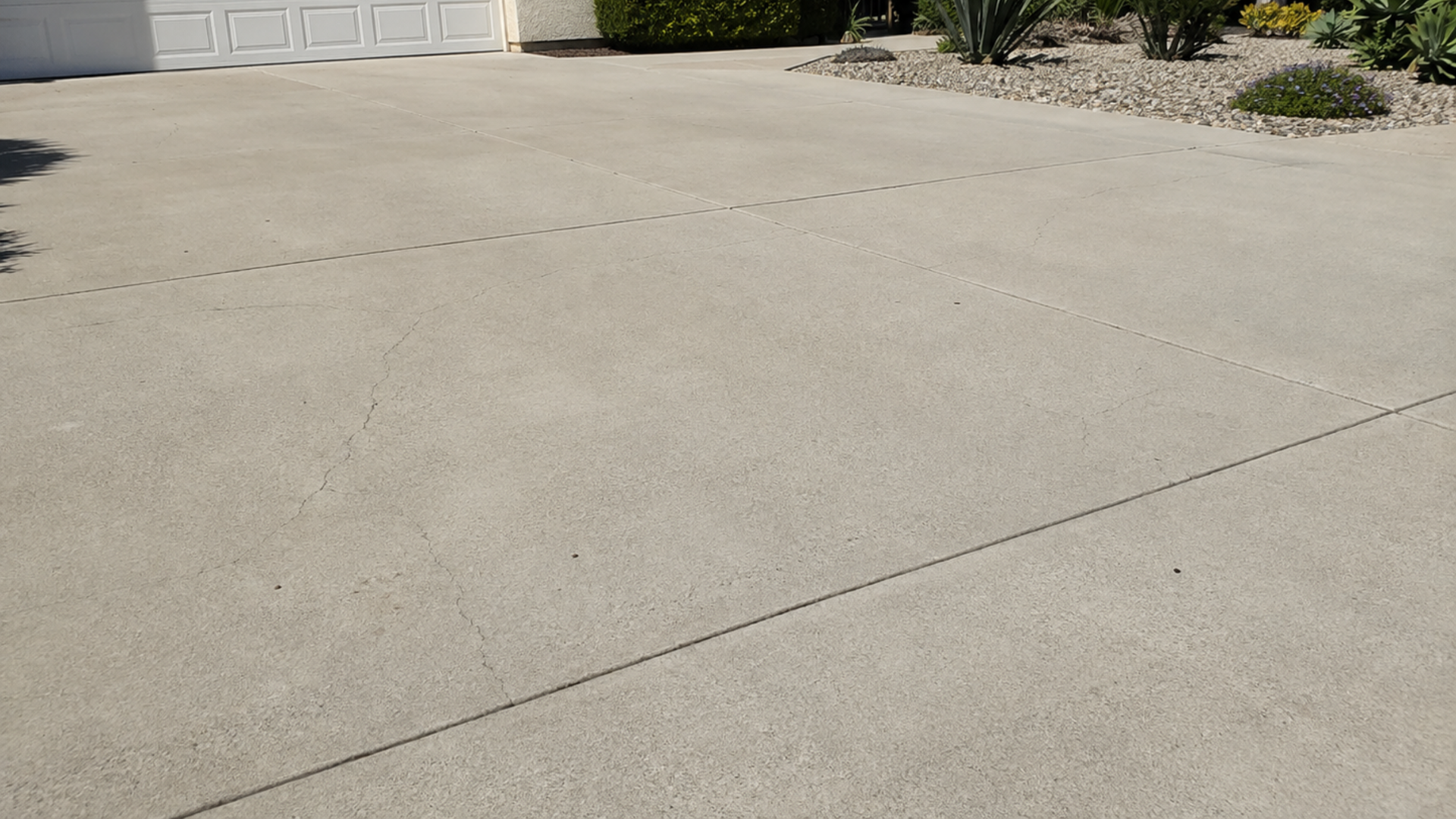
Thin, shallow cracks no wider than a strand of hair, usually caused by minor surface shrinkage as the concrete cures. They are extremely common and rarely affect the slab's strength. | Concern level: Low, usually cosmetic.
Plastic Shrinkage Cracks
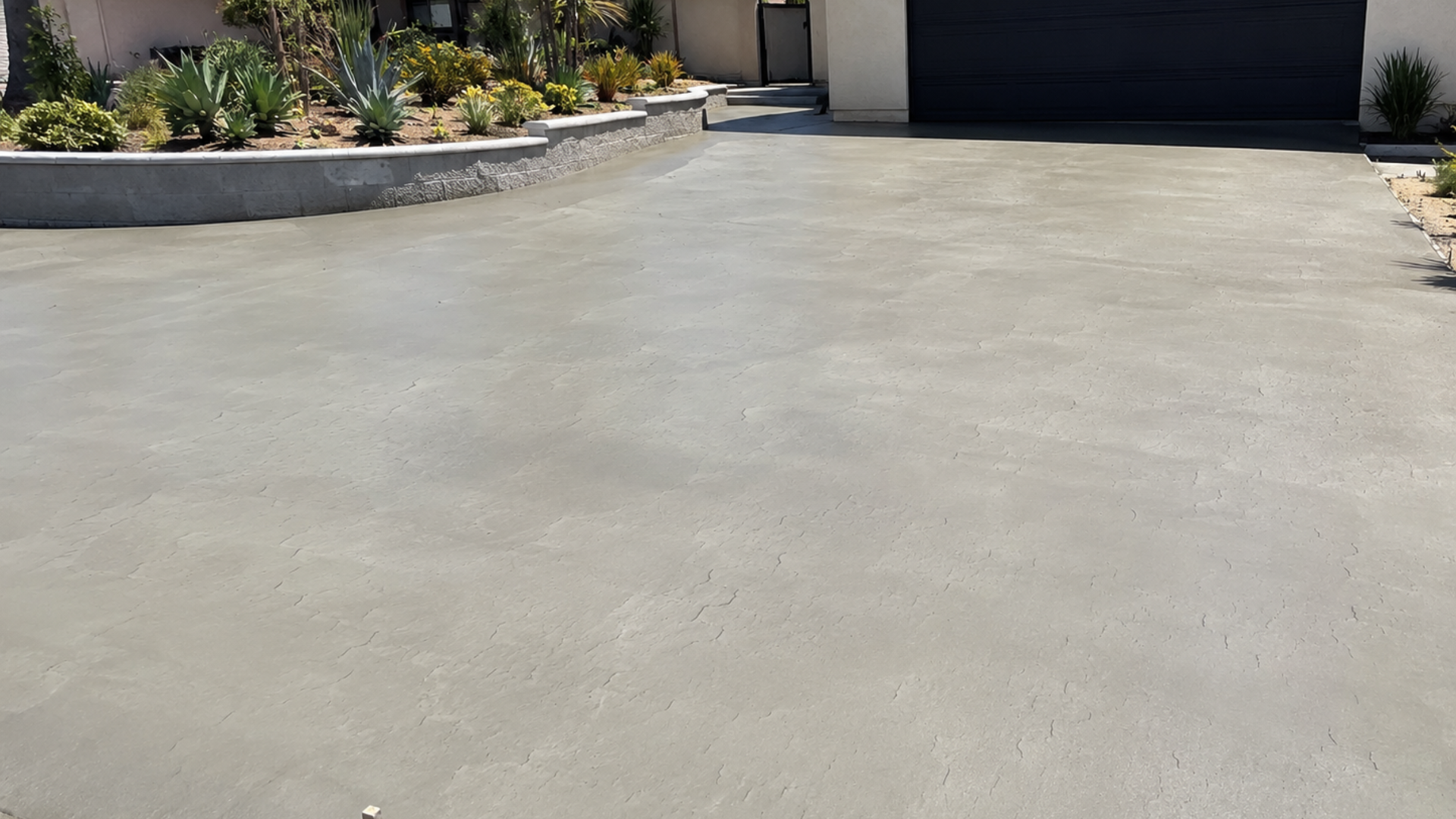
Fine cracks that appear while the concrete is still setting, caused by the surface drying too fast during the pour, often on a hot or windy day. They tend to be short and irregular across the surface. | Concern level: Low to moderate, typically cosmetic.
Drying Shrinkage Cracks
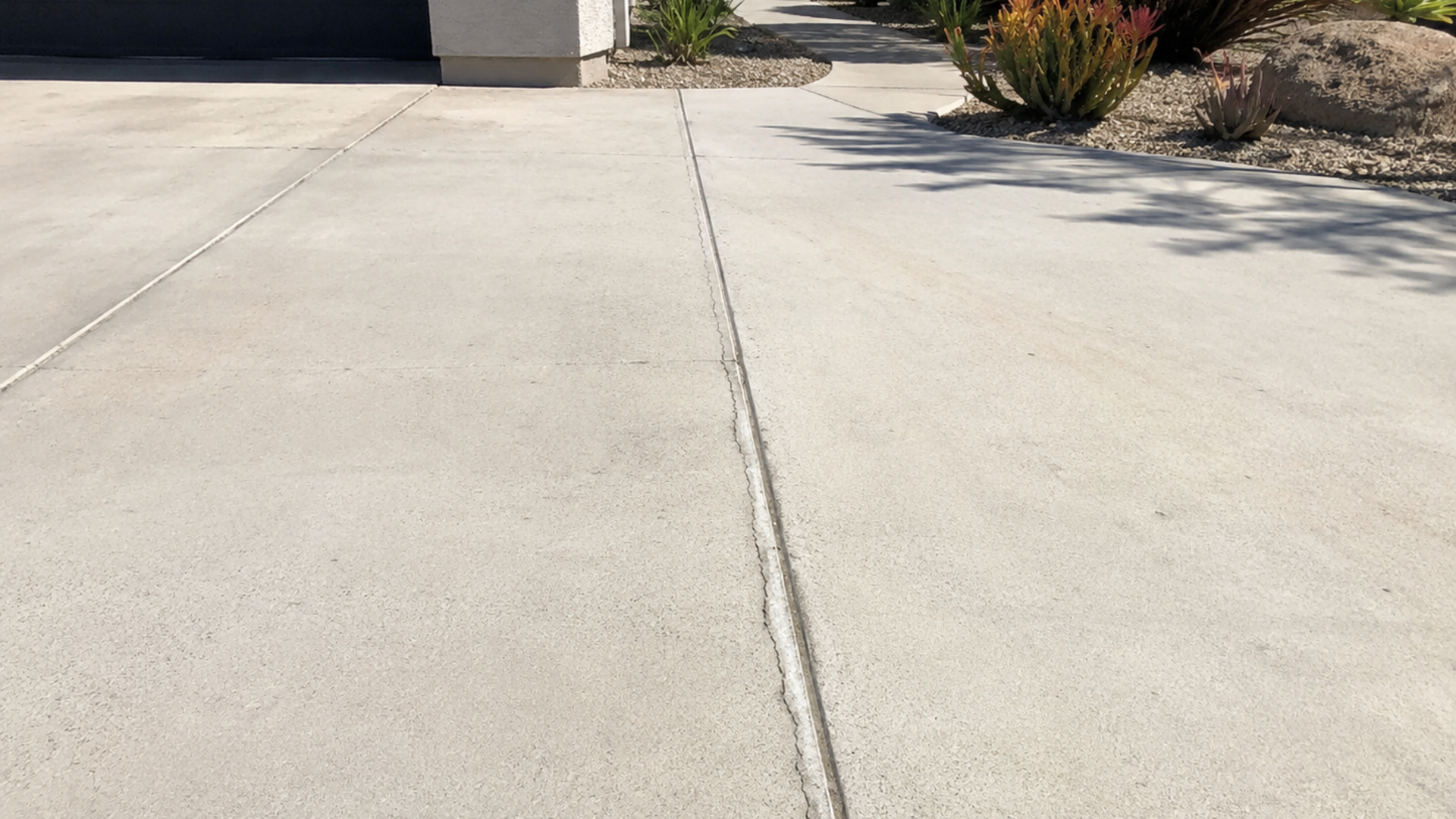
Cracks that develop as the slab loses moisture and shrinks after curing. When control joints are placed correctly, this shrinkage shows up along the joints rather than randomly across the surface. | Concern level: Low, especially when it follows a joint.
Settlement Cracks
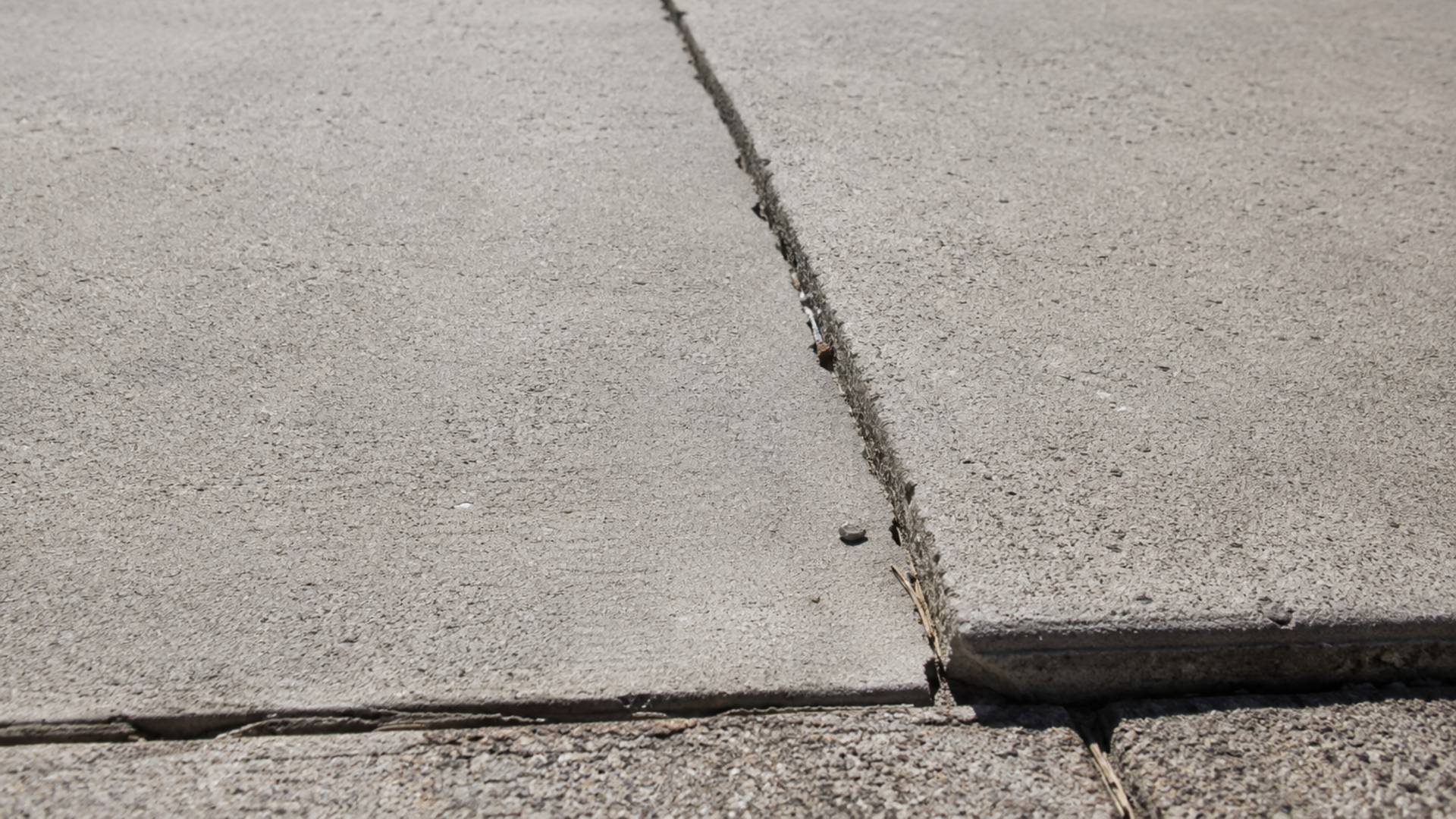
Cracks that form when the subgrade shifts or voids open beneath the slab, letting a section drop unevenly. These often show a difference in height from one side of the crack to the other. | Concern level: Moderate to high.
Heaving Cracks
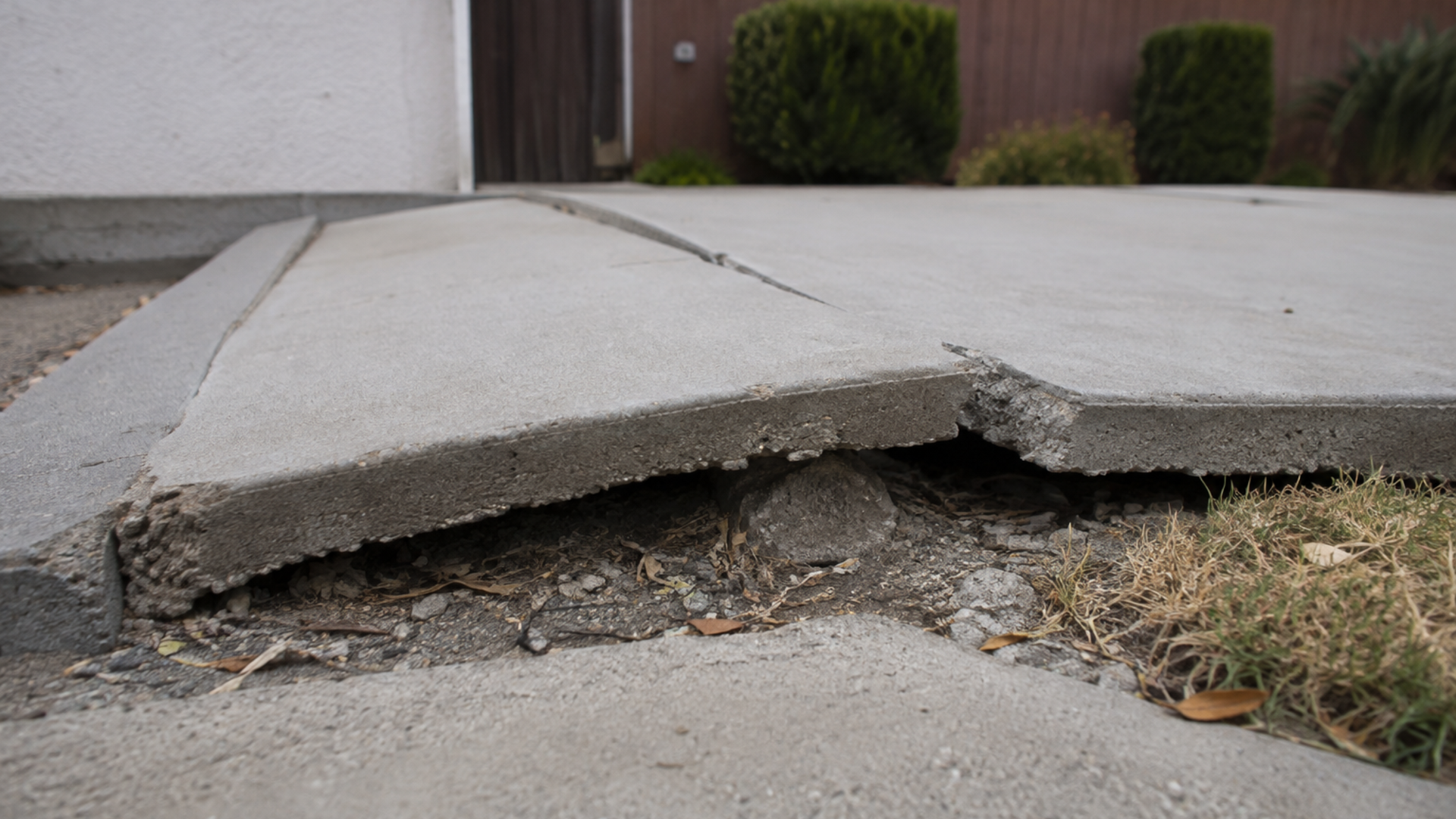
Cracks caused by expansive soil swelling or tree roots pushing the slab upward from below. They frequently appear where a slab has lifted or humped in the middle. | Concern level: Moderate to high.
Structural Cracks
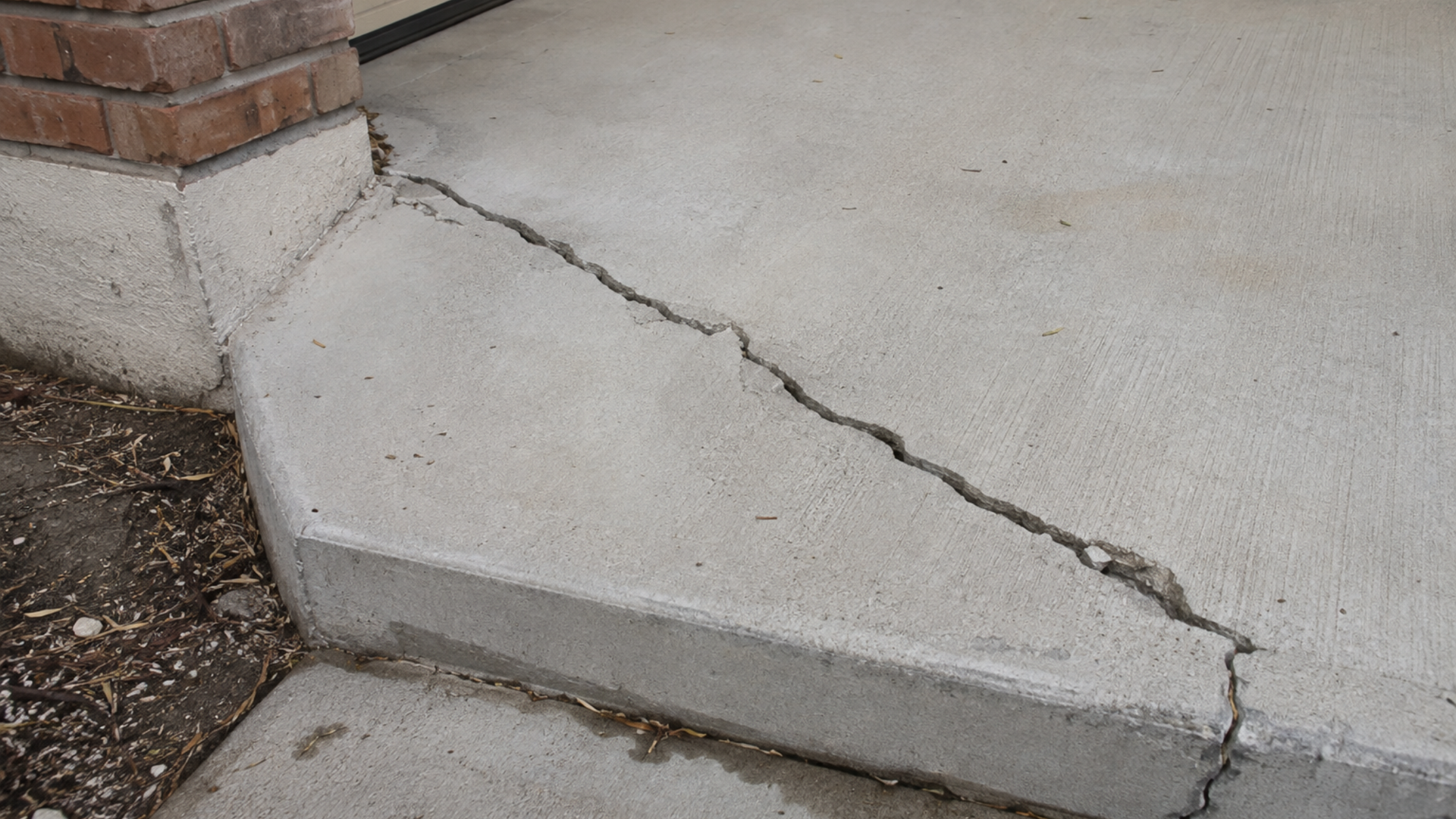
Wider cracks caused by overloading or foundation movement, sometimes running diagonally from a corner. These indicate the slab or the structure it supports is under stress. | Concern level: High, have it evaluated.
Most of what homeowners notice falls into the first three types and is cosmetic. The last three point to movement in the ground or the structure and are worth a professional look.
Which Cracks Should You Worry About?
A simple way to gauge a crack is to look at its width, its behavior, and whether the surface is level across it. The following signs suggest a crack is more than cosmetic:
- The crack is wider than about an eighth of an inch, or is visibly widening over time.
- One side of the crack sits higher than the other, indicating the slab has shifted.
- The crack is accompanied by sinking, pooling water, or a section that rocks underfoot.
- Cracks radiate from a corner or appear alongside doors and posts that no longer line up.
By contrast, thin hairline cracks, cracks that follow a control joint, and stable cracks that are not moving or displacing are typically nothing to lose sleep over. When you are unsure, having a contractor assess it is a cheap way to settle the question, and for driveways specifically, our overview of Concrete Driveway Replacement in Thousand Oaks covers when repair gives way to replacement.
How to Prevent Concrete Cracking
Because the causes are well understood, so are the defenses. Preventing cracks is about doing each stage of the work correctly rather than relying on any single trick. Here is how quality concrete work resists cracking.
Preventative Engineering Starts with the Soil
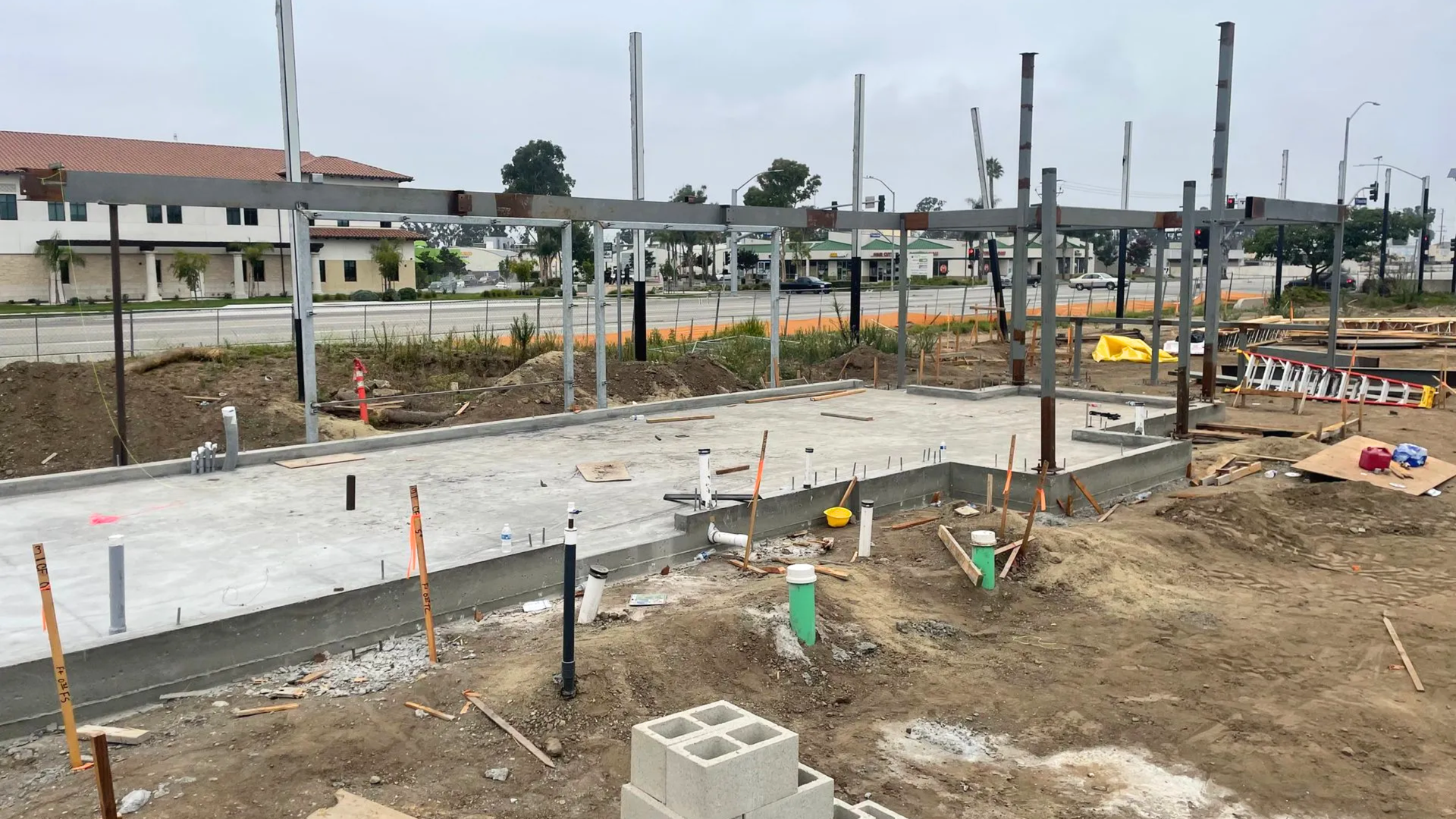
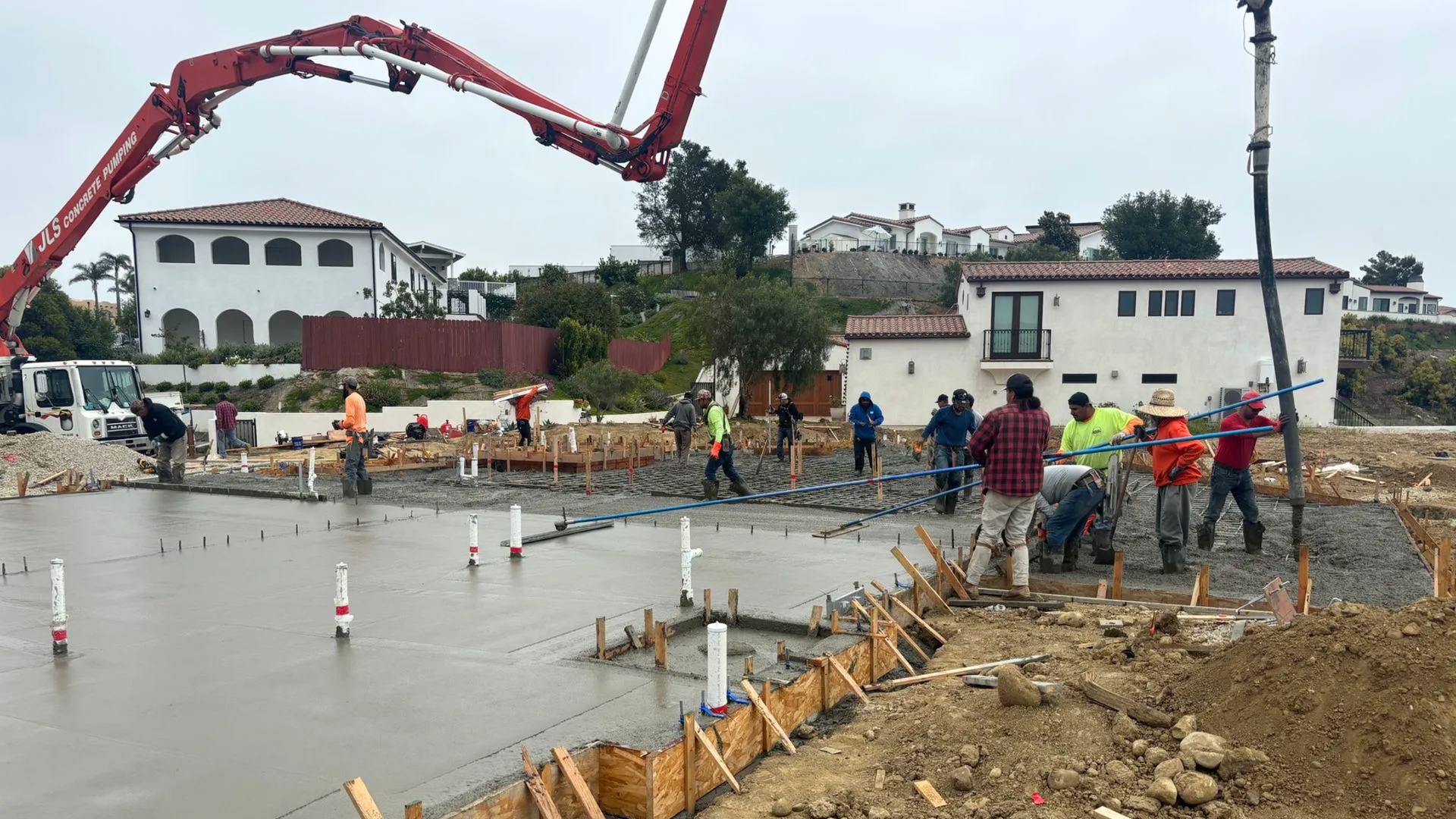
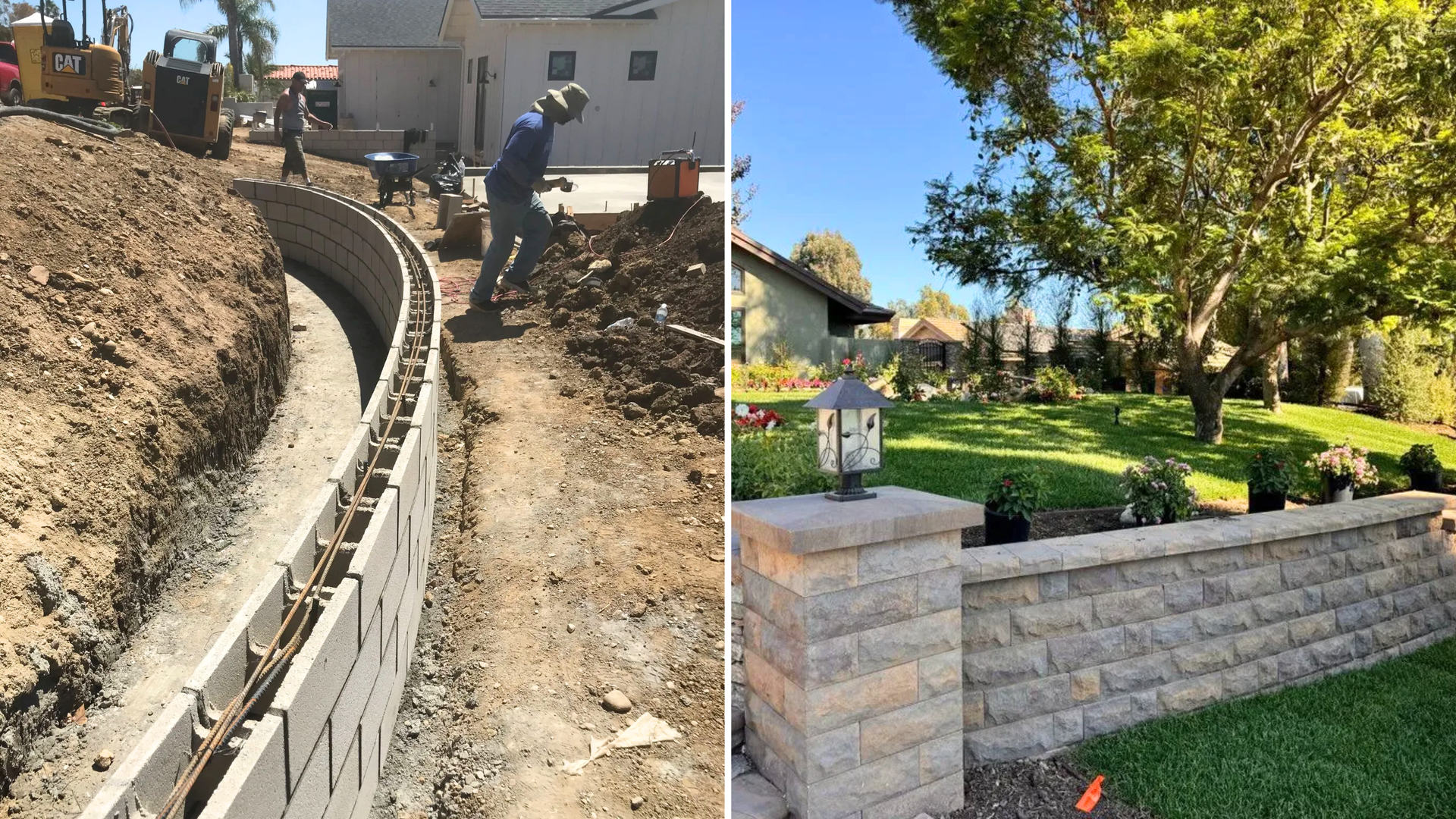
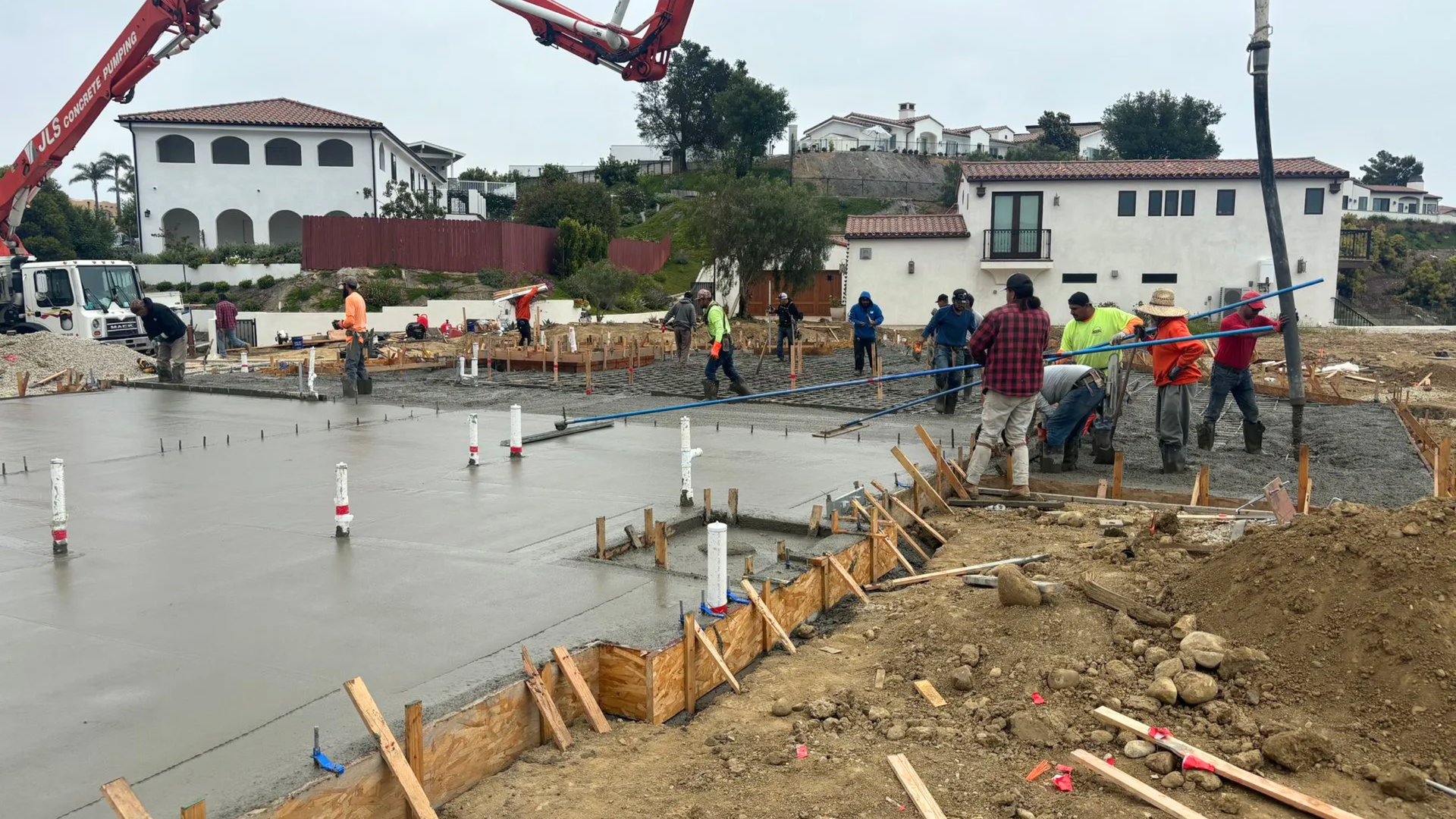
On expansive clay, soil preparation is the single most important step. Understanding why California property owners face cracking requires looking at subgrade prep and mix ratios first. The prevention strategies deployed by an experienced Thousand Oaks concrete contractor involve excavating expansive native clay, packing a heavy crushed aggregate base, embedding rebar grids, and cutting deep control joints to manage natural soil expansion without ruining the slab surface. Getting the ground right is what separates concrete that lasts from concrete that fails early.
The Right Mix and Reinforcement
A crack-resistant slab starts with a correct mix and proper reinforcement. That means:
- A controlled water-cement ratio, avoiding the temptation to add water for easier placement.
- Reinforcement such as rebar or wire mesh sized and positioned for the load the slab will carry.
- A mix appropriate for the specific project and the local conditions.
Reinforcement does not prevent every crack, but it holds the concrete together across any cracks that do form, keeping them tight and stable rather than allowing them to spread.
Control Joints in the Right Places
Control joints are one of the most effective and most misunderstood tools for managing cracks. They do not stop cracking; they direct it. By cutting a weakened groove at planned intervals, the crew ensures that the shrinkage crack forms neatly along the joint instead of wandering across the surface. For joints to work, spacing and depth have to be right for the slab thickness, which is a matter of experience rather than guesswork.
Proper Curing
Finally, how concrete is cured in its first days has a lasting effect. Curing too fast, especially in inland heat, causes surface shrinkage and cracking. Slow, moist curing lets the concrete gain strength steadily and reduces shrinkage stress. Crews control curing by misting, covering, or applying curing compounds during the critical early period.
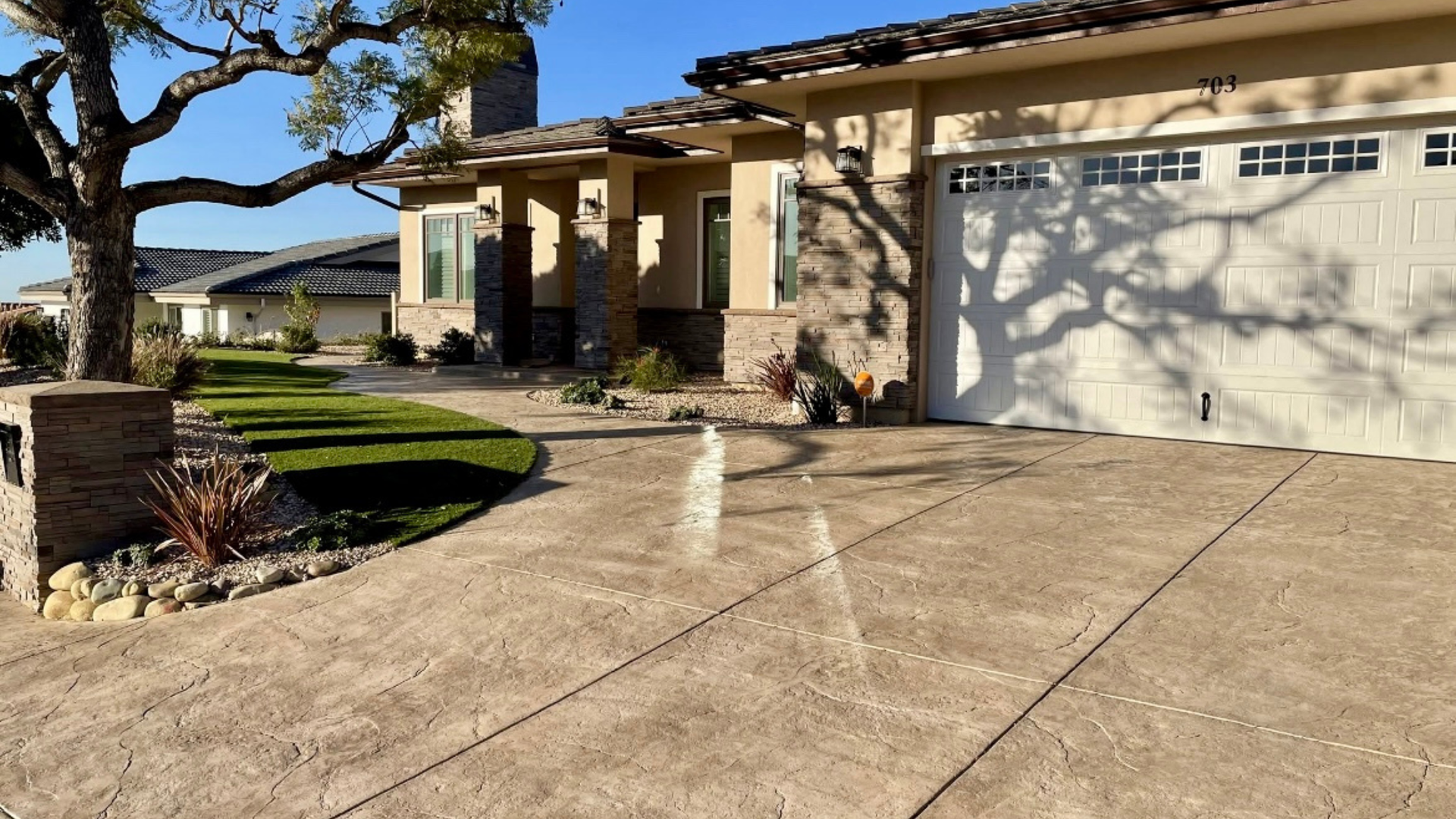
Each of these steps applies across project types. A concrete driveway installation carries vehicle loads that demand solid reinforcement, a foundations and concrete slabs project depends heavily on soil preparation, and a concrete patios surface benefits from careful joint placement and curing to stay looking clean for years.
Frequently Asked Questions
Why does concrete crack in California?
Concrete cracks in California for a mix of reasons, but the most common local culprit is expansive clay soil that swells when wet and shrinks when dry, putting repeated stress on slabs above it. Rapid thermal swings between hot inland days and cool nights, drying shrinkage as fresh concrete cures, and settlement of a poorly prepared subgrade also contribute. Most of these causes are preventable with proper soil preparation, a correct mix, control joints, and good curing.
Are all concrete cracks a problem?
No. Some cracking is normal and even expected. Fine hairline cracks and cracks that follow control joints are usually cosmetic and do not affect the slab's performance. Cracks become a concern when they are wide, uneven in height across the crack, actively growing, or accompanied by sinking or lifting, which can point to soil movement or a structural issue worth having evaluated.
How do you prevent concrete from cracking?
Cracking is minimized through good practices at every stage: preparing and compacting the subgrade, using a proper crushed aggregate base, controlling the water content of the mix, placing reinforcement like rebar or wire mesh, cutting control joints at the right spacing and depth, and curing the concrete slowly with adequate moisture. On expansive clay, extra soil preparation is the single most important step.
What are control joints and do they stop cracks?
Control joints are grooves cut or tooled into a slab at planned intervals. They do not stop concrete from cracking; instead they control where it cracks. Concrete shrinks as it cures, and control joints create a weakened line so the inevitable shrinkage crack forms neatly along the joint rather than randomly across the surface. Correct joint spacing and depth are essential for them to work.
Why is my new concrete driveway already cracking?
Early cracking in new concrete usually points to plastic shrinkage from a surface that dried too fast, a mix with too much water, insufficient or poorly timed control joints, or an inadequately prepared subgrade. In warm inland areas, a pour finished on a hot, dry afternoon is especially prone to early surface cracks. A qualified contractor can assess whether the cracking is cosmetic or a sign of a deeper issue.
Conclusion: Cracking Is Manageable with the Right Approach
Concrete cracks in California because of forces that are, for the most part, well understood: expansive clay soil that shrinks and swells, sharp temperature swings, the natural shrinkage of curing concrete, and the settlement that follows poor preparation. Knowing those causes turns cracking from a mystery into a manageable risk. The same list of causes is really a checklist for prevention, and a crew that respects every step, from the subgrade up through curing, produces concrete that stays sound and attractive for decades.
If you are planning a new driveway, patio, or slab, or you are looking at cracks in existing concrete and want an honest assessment, the team at Stoneworks Construction Services serves Thousand Oaks, Ventura County, and Santa Barbara County with concrete built to resist cracking from the ground up. Reach out to request a free estimate and start your project on a solid foundation.