The Best Time of Year to Pour Concrete in California
Timing is one of the most overlooked parts of a successful concrete project. Homeowners often focus on design, finish, and price, then assume the pour can happen whenever the crew is available. In California, and especially across the inland valleys of Ventura and Los Angeles Counties, the weather on pour day has a direct effect on how strong, smooth, and long-lasting your finished surface will be. Understanding the best time to pour concrete in California helps you plan around heat, rain, and humidity so your driveway, patio, or slab cures the way it should.
The short answer is that spring and fall usually offer the most reliable conditions in Southern California. The longer answer depends on where you live, what you are building, and how the season is trending in any given year. This guide walks through how temperature and moisture affect a pour, breaks down the pros and cons of each season, and shares the practical steps professional crews use to pour successfully even when conditions are not perfect.
Why Timing Matters More Than Most Homeowners Expect
Concrete is not simply poured and left to dry. It goes through a chemical process called curing, in which water and cement react to build strength over days and weeks. The rate of that reaction depends heavily on temperature and moisture in the surrounding air. When conditions are steady and moderate, concrete cures at a predictable pace and reaches its full designed strength. When conditions swing toward extreme heat or heavy rain, the process is disrupted, and the finished surface can suffer.
Two forces do most of the damage. The first is rapid evaporation, which pulls moisture out of the surface faster than the concrete can use it. The second is temperature extremes, which speed up or slow down setting in ways that make the surface harder to finish and more likely to crack. Getting the timing right is the simplest, lowest-cost way to protect a project that you expect to last for decades.
How Inland Valley Heat Affects a Concrete Pour
Southern California summers are warm across the board, but the inland valleys are where heat becomes a real concern. Areas like Simi Valley, Thousand Oaks, and Moorpark regularly climb well above the coastal temperatures just a few miles away. When concrete is poured on a blistering, dry afternoon, the water at the surface evaporates too quickly. This creates plastic shrinkage cracks, the fine surface cracks that appear while the concrete is still setting.
Heat causes a few connected problems. Concrete sets faster, which shortens the window crews have to place, level, and finish the surface. Rapid moisture loss weakens the top layer and can lead to dusting or scaling later on. High slab temperatures can also trap heat inside thicker pours, contributing to thermal cracking as the material cools unevenly. None of this means summer pours are impossible. It means summer pours require more planning, faster crews, and active moisture control.
As a general rule, once ambient temperatures rise above roughly 90 degrees Fahrenheit on a dry, windy day, the risk climbs quickly. That is why experienced crews shift their schedule and their technique when the forecast heats up.
How Southern California's Rainy Season Affects a Pour
At the other end of the calendar, the winter rainy season brings a different set of challenges. Southern California's rain typically falls between November and March. Rain on freshly poured concrete is a problem because water landing on the surface dilutes the cement paste, weakens the finish, and can cause scaling and a chalky, dusty top layer. A pour that gets caught in a downpour before it has set can lose much of its surface quality.
Cold is far less of a concern here than it is in northern climates, but it still matters. When overnight temperatures drop into the low 40s or below, curing slows down and the concrete takes longer to gain strength. Coastal and valley lows rarely reach the freeze-thaw territory that damages concrete in colder states, so the main winter issue in this region is rain timing and short curing days rather than hard freezes.
Season by Season: The Best Time to Pour Concrete in California
The table below summarizes how each season tends to perform for concrete work across Southern California, from the coast to the inland valleys.
| Season | Typical Conditions | Advantages | Watch-Outs |
|---|---|---|---|
| Spring (Mar-May) | Mild days, cool nights, low humidity | Steady curing, low rain risk by late spring, ideal working window | Occasional late-season rain in early spring |
| Summer (Jun-Aug) | Hot inland, mild coastal, dry air inland | Long dry stretch, predictable scheduling, no rain delays | Peak afternoon heat, rapid evaporation, shrinkage cracks inland |
| Fall (Sep-Nov) | Warm days, cooling nights, low rain until late fall | Excellent curing conditions, comfortable finishing weather | Early heat waves, Santa Ana winds increase evaporation |
| Winter (Dec-Feb) | Cooler days, rainy season, shorter daylight | Coastal pours still possible on dry stretches | Rain delays, slower curing, short working days |
For most homeowners, spring and fall are the sweet spots. Daytime temperatures are warm enough for good curing, nights are cool without being cold, and the rain risk is manageable if you watch the forecast.
Summer works well too, particularly along the coast where the marine layer keeps mornings cool, as long as inland pours are scheduled early and protected. Winter is the trickiest season, but coastal projects can still move forward during dry stretches with proper planning.
Coastal Versus Inland: Location Changes the Answer
One of the reasons a single "best month" does not apply everywhere in California is that microclimates vary sharply over short distances. A pour in Oxnard or Ventura near the coast benefits from the marine layer, cooler mornings, and moderated afternoon temperatures. Just inland, Thousand Oaks and Simi Valley run several degrees warmer and drier, which pushes the ideal pouring window toward earlier hours and cooler months.
If your property sits in an inland valley, the summer afternoon heat is the single biggest factor to plan around. If you are closer to the coast, your pouring window is wider through much of the year, and the rainy season becomes the main thing to watch. A knowledgeable local contractor reads these microclimates the way a farmer reads the soil, and adjusts the schedule accordingly.
The Best Time of Day to Pour in Ventura County
Season matters, but so does the hour. On warm days, early morning is almost always the best time to pour. The air is cooler, humidity is higher, and along the coast the marine layer has not yet burned off, all of which slow evaporation and give crews more working time. Pouring in the morning also lets the concrete gain early strength before it faces the hottest part of the day.
In cooler months, a mid-morning start can be better, giving overnight moisture a chance to lift and letting the day warm slightly before the pour. The goal in every season is the same: place the concrete when conditions will keep evaporation and setting under control long enough to finish the surface properly.
How Professionals Pour Successfully in Any Season
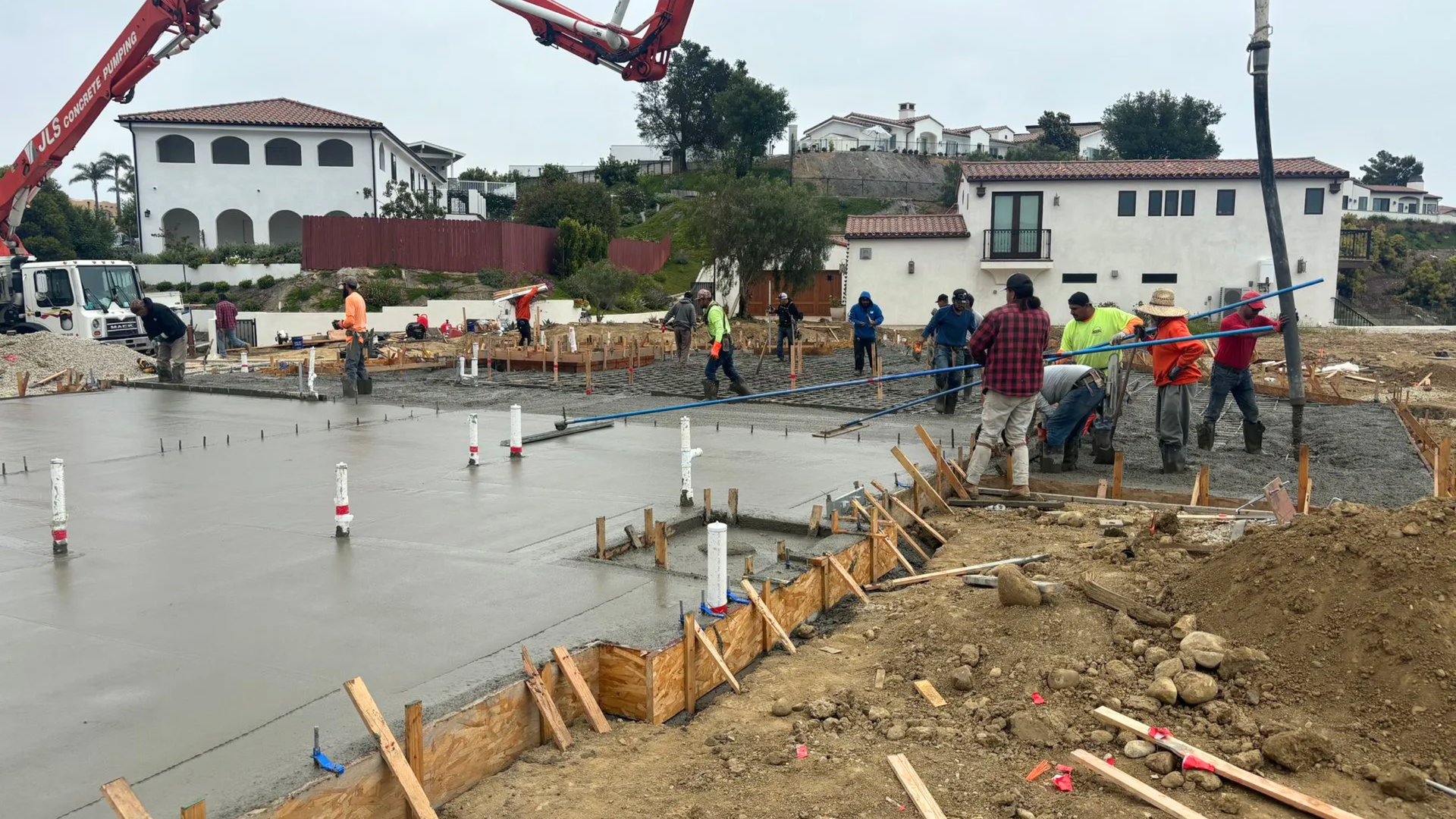
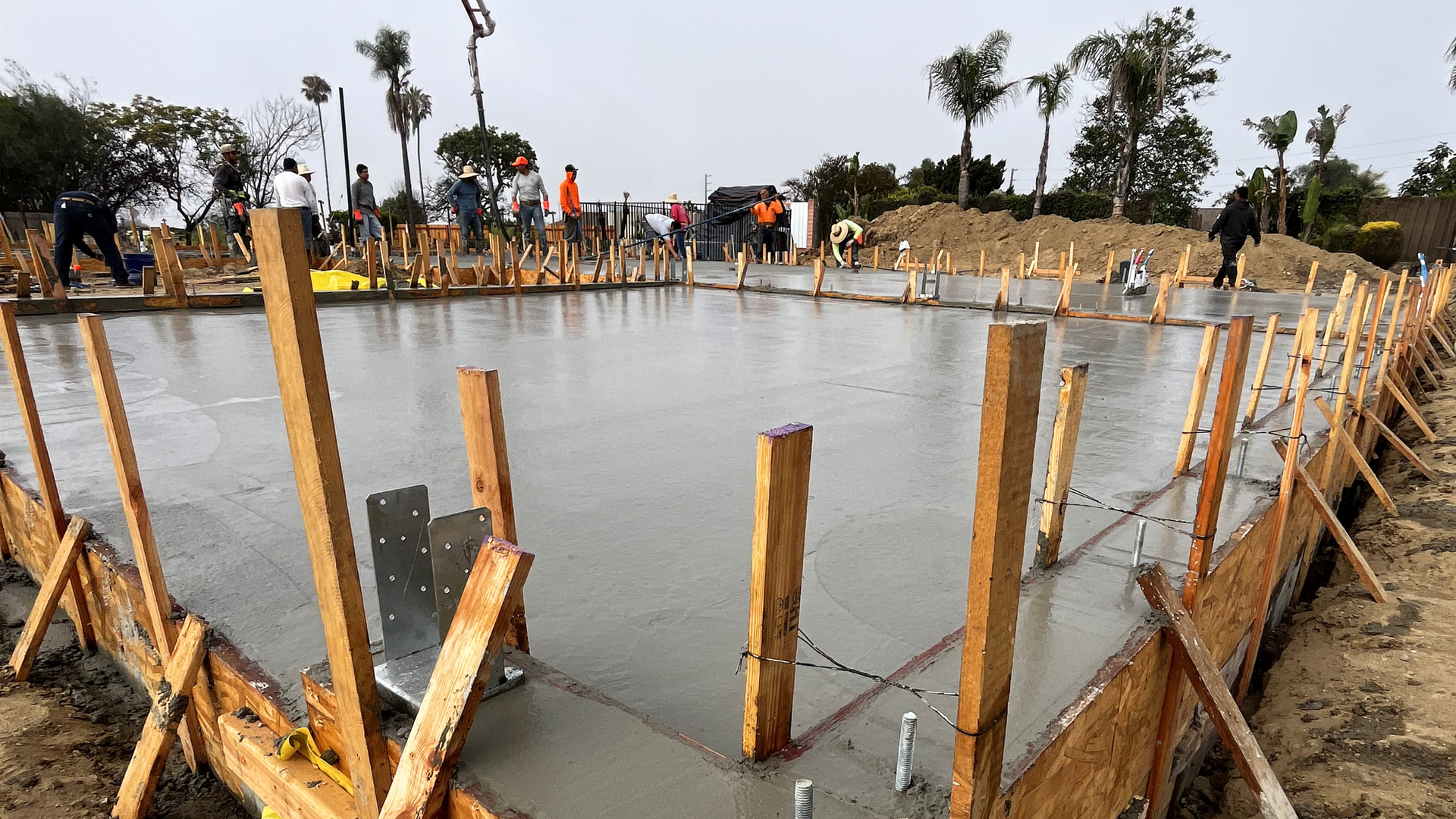
Timing reduces risk, but skilled crews also control conditions directly. When the weather is not ideal, professionals rely on a set of proven techniques to protect the pour. In hot weather, that includes starting early, keeping ready-mix cool, misting the subgrade, applying curing compounds, and shading or covering the surface to slow evaporation. In cooler or damp weather, it includes watching the radar closely, using windbreaks and covers, and sometimes adjusting the mix to set at a workable rate.
Proper subgrade preparation matters year-round. A well-compacted, evenly moistened base helps the concrete cure uniformly and resist cracking regardless of the season. This is one of the clearest differences between a durable professional installation and a rushed job, and it is a major reason timing alone does not guarantee a good result. The crew and the preparation matter just as much as the calendar.
If you are planning a driveway, understanding both the timing and the process helps you set realistic expectations. Our guide to concrete driveway installation explains what a professional pour involves from grading to finishing, and our breakdown of driveway pricing in How Much Does a Concrete Driveway Cost in Southern California helps you budget with local conditions in mind.
Matching the Season to Your Project Type
Different projects have different tolerances for weather. A large concrete foundation project involves thicker pours that hold heat longer, so avoiding peak summer heat is especially important for foundations and structural slabs. Decorative and stamped work, including many concrete patios, requires extra finishing time, which makes the mild, steady conditions of spring and fall particularly valuable. Smaller flatwork like walkways is more forgiving and can be scheduled across a wider range of dates.
Thinking about your specific project helps you choose a season that gives the crew enough working time and the concrete enough steady conditions to cure well. When in doubt, a local contractor can look at your project size, location, and finish and recommend the best window.
Planning Your Pour: A Simple Checklist
Before you lock in a date, a few quick considerations will help you time the project well. Each of the points below takes only a minute to check, and together they go a long way toward a smooth pour and a durable finish.
Check the Extended Forecast
Look at both temperature and rain in the days surrounding your target date, not just the day itself. Build in a week or two of flexibility rather than committing to a single day, so your crew can shift the pour if a heat wave or storm moves in.
Match the Timing to Your Location
For inland properties in areas like Thousand Oaks and Simi Valley, favor spring, fall, or early summer mornings when the heat is manageable. For coastal properties near Ventura and Oxnard, keep an eye on the rainy season and take advantage of dry winter stretches when the marine layer keeps conditions steady.
Confirm Your Contractor Plans for the Conditions
Ask how the crew will handle the weather on your specific date. A prepared contractor plans for early starts, curing compounds, and surface protection in hot weather, and watches the radar closely during the rainy season.
Choose a Crew That Treats Timing as Part of the Job
Above all, work with a crew that treats timing as part of the job rather than an afterthought. The right schedule, matched to your location and project, is one of the least expensive ways to add years to the life of your concrete.
Frequently Asked Questions
What is the best time of year to pour concrete in California?
For most of Southern California, spring and fall offer the most reliable conditions, with mild daytime temperatures, cooler nights, and low rain risk. These months let concrete cure at a steady rate without the rapid evaporation of peak summer heat or the delays of the winter rainy season. In coastal areas the pouring window is wide much of the year, while inland valleys like Simi Valley and Thousand Oaks benefit most from avoiding the hottest summer afternoons.
What temperature is too hot to pour concrete?
Concrete becomes harder to place and finish once ambient temperatures climb above roughly 90 degrees Fahrenheit, and the risk rises sharply on dry, windy days. High heat speeds up evaporation and setting, which can cause plastic shrinkage cracks and reduce final strength. On hot days, professional crews pour early in the morning, add curing compounds, and keep the surface moist to control temperature and moisture loss.
Can you pour concrete in the rain in Southern California?
It is best to avoid pouring concrete during active rain. Water landing on fresh concrete dilutes the surface, weakens the finish, and can lead to scaling or dusting. Southern California's rainy season runs roughly from November through March, so contractors watch the forecast closely and reschedule pours when needed to protect quality.
Does concrete cure faster in hot weather?
Concrete sets faster in hot weather, but faster is not better. Rapid setting gives crews less time to place and finish the surface and can trap heat that leads to thermal cracking and lower long-term strength. Controlled, steady curing at moderate temperatures produces a stronger, more durable slab, which is why timing the pour matters so much in California's climate.
What is the best time of day to pour concrete in summer?
During summer, early morning is the ideal time to pour. Cooler air, higher humidity, and the marine layer along the coast slow evaporation and give crews more working time before the afternoon heat sets in. Pouring in the morning also allows the concrete to gain early strength before facing peak daytime temperatures.
Conclusion: Plan the Timing, Protect the Investment
The best time to pour concrete in California comes down to steady, moderate conditions, which usually means spring and fall for most homeowners, mild summer mornings along the coast, and careful scheduling around the winter rains. Inland valleys like Thousand Oaks and Simi Valley call for extra attention to summer heat, while coastal areas enjoy a wider window interrupted mainly by the rainy season. Match the season and the hour to your location and project type, and you give your driveway, patio, or foundation the best possible start.
Timing is important, but it works hand in hand with skilled crews and proper preparation. If you are planning a concrete project anywhere in Thousand Oaks, Ventura County, or Santa Barbara County, the team at Stoneworks Construction Services can help you choose the right window and handle the pour with proven techniques for local conditions. Reach out to request a free estimate and get expert guidance tailored to your property and the season.