Retaining Walls in Southern California: Types, Costs, Design Options, and What Homeowners Should Know
Retaining walls play an important role in many Southern California properties. They help stabilize soil, manage elevation changes, and create usable outdoor space on sloped landscapes. In addition to their structural purpose, retaining walls also influence how a yard looks and functions. When properly designed and installed, they can transform uneven terrain into practical, well-defined outdoor areas.
For homeowners considering a retaining wall project, understanding the different types, construction methods, costs, and long-term maintenance needs is essential. Retaining walls must be engineered to manage soil pressure, water drainage, and site conditions. Poor design or rushed installation can lead to shifting, cracking, or structural failure over time.
This guide explains the key considerations homeowners should review before building a retaining wall. It covers material options, realistic cost ranges, installation variables, performance expectations, and long-term durability. If you are exploring multiple outdoor improvements, our guide to Residential Concrete Services in Southern California explains how retaining walls fit within a broader property upgrade plan.
Why Retaining Walls Are Common in Southern California
Southern California landscapes often include slopes, hillsides, and uneven terrain. Retaining walls allow homeowners to safely manage these elevation changes while creating more usable space around the home.
A properly designed retaining wall can:
- Prevent soil erosion
- Stabilize slopes and hillside areas
- Create level surfaces for patios, gardens, or walkways
- Protect structures from soil movement
- Improve landscaping design and layout
Retaining walls also help manage water flow. By controlling drainage and directing runoff away from structures, they reduce the risk of erosion and foundation issues.
For many properties, retaining walls are both structural and aesthetic features that contribute to the overall layout of the yard.
Common Types of Retaining Walls
Several retaining wall systems are commonly used in residential construction. Each option has different structural properties, appearance, and cost considerations.
Concrete Block Retaining Walls
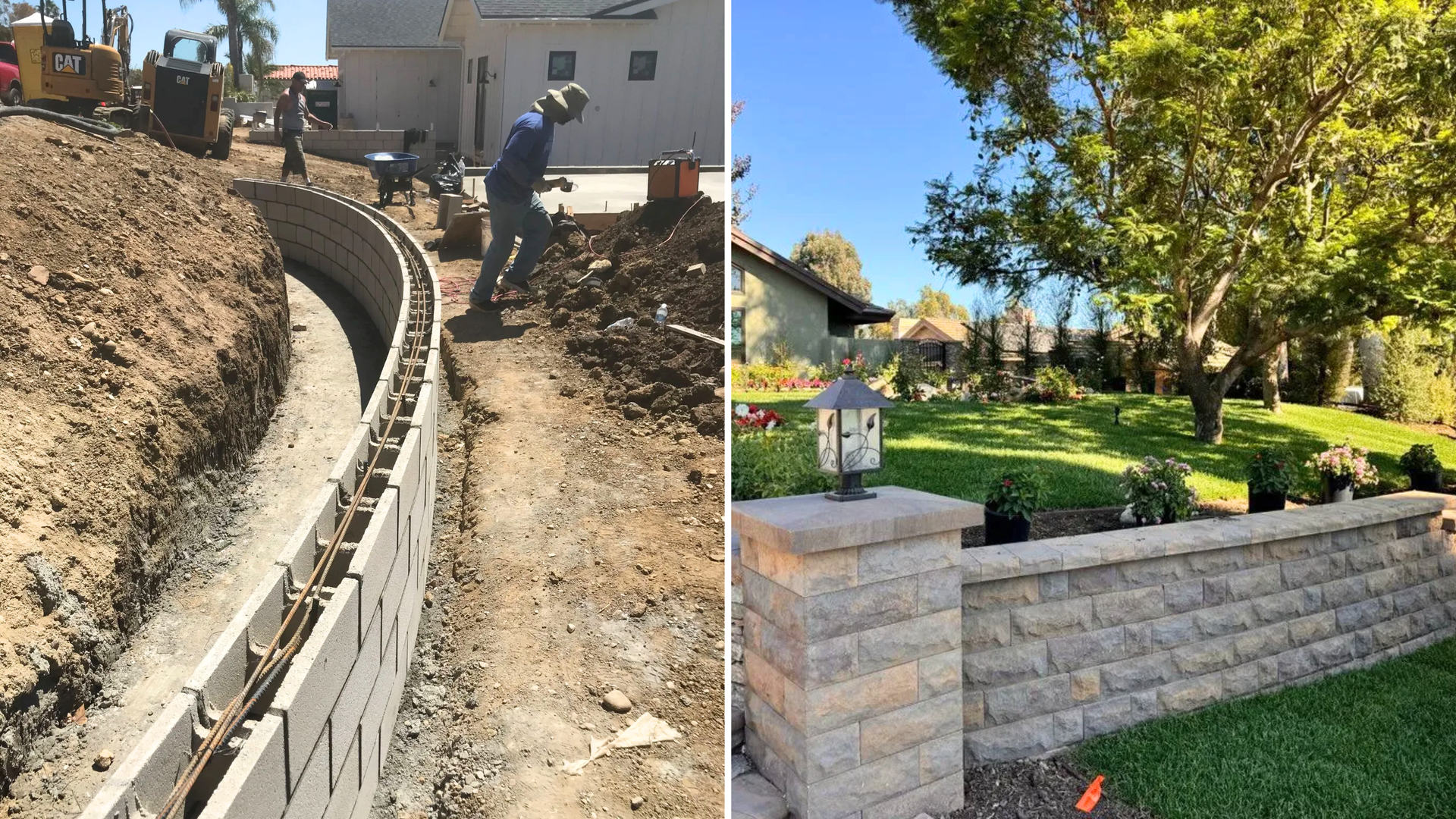
Concrete block retaining walls, often called CMU walls, are widely used because they provide structural strength and design flexibility. These walls use reinforced concrete blocks stacked and secured with mortar or specialized construction methods.
Advantages include:
- High structural capacity
- Consistent appearance
- Ability to support taller walls
- Compatibility with different finishes
Concrete block walls are often used when structural reinforcement is required, especially on sloped properties.
Poured Concrete Retaining Walls
Poured concrete walls are constructed using reinforced forms that hold wet concrete during installation. Once cured, the result is a solid, continuous wall with significant structural strength.
These walls are often chosen for:
- Larger structural applications
- Properties with significant soil pressure
- Situations requiring engineered support
Poured walls may also be finished with textures or surface treatments to improve appearance.
Segmental Retaining Walls
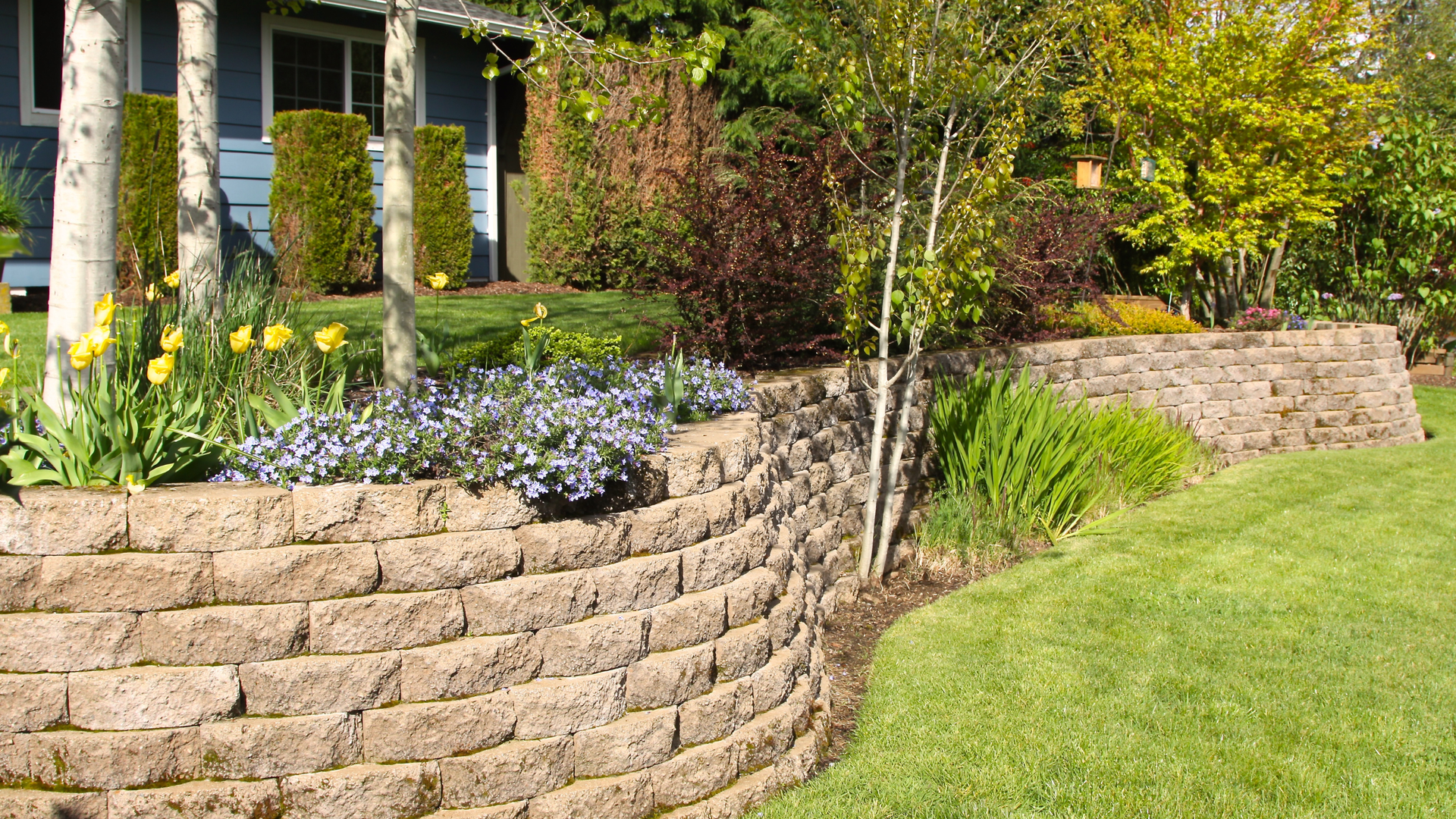
Segmental retaining walls use interlocking concrete blocks designed to stack without mortar. These systems rely on gravity, block design, and reinforced soil to maintain stability.
Segmental systems are often selected for landscaping applications because they:
- Provide clean, uniform appearance
- Install faster than some structural wall systems
- Offer modular design flexibility
However, height limitations and site conditions determine whether this type of wall is appropriate.
Natural Stone Retaining Walls
Natural stone walls are sometimes used in residential landscaping where aesthetics are a priority. While they can provide a distinctive appearance, they often require skilled installation and may have higher material costs.
Stone walls are most common in decorative or lower-height retaining applications rather than large structural walls.
Retaining Wall Design Considerations
Building a retaining wall involves more than stacking blocks or pouring concrete. Proper design ensures the wall performs correctly under long-term soil pressure.
Key design considerations include:
Soil Conditions
Different soil types place varying pressure on retaining walls. Clay soil retains moisture and expands, increasing lateral pressure. Sandy soil behaves differently and may require different reinforcement strategies.
Professional site evaluation helps determine the appropriate wall design.
Wall Height
Wall height significantly affects structural requirements. Taller walls require stronger reinforcement and drainage planning.
Typical residential retaining wall heights include:
| Wall Height | Typical Use |
|---|---|
| 2–3 feet | Landscape separation |
| 3–4 feet | Garden terraces |
| 4–6 feet | Structural slope support |
| 6+ feet | Engineered retaining systems |
Walls above certain heights may require engineering approval depending on local building codes.
Drainage Systems
Drainage is one of the most critical aspects of retaining wall performance. Water buildup behind a wall increases pressure and can cause failure.
Proper drainage systems often include:
- Gravel backfill
- Drainage pipes
- Filter fabric
- Weep holes
These elements allow water to move away from the wall and prevent pressure buildup.
Reinforcement
Reinforcement improves stability and distributes load. Depending on the wall type, reinforcement may include:
- Steel rebar
- Geogrid reinforcement layers
- Structural footings
These elements strengthen the wall and reduce the risk of movement over time.
Retaining Wall Costs in Southern California
Retaining wall costs vary based on material choice, wall height, reinforcement requirements, and site accessibility. The table below reflects common price ranges for residential projects.
Retaining Wall Cost Guide
| Retaining Wall Type | Estimated Cost Per Sq Ft |
|---|---|
| Segmental block wall | $40–$60 |
| Reinforced CMU wall | $60–$90 |
| Poured concrete wall | $70–$110 |
| Natural stone wall | $80–$120 |
Additional factors that influence cost include:
- Excavation requirements
- Drainage system installation
- Engineering requirements
- Soil conditions
- Equipment access
For sloped or hillside properties, site preparation may represent a significant portion of the overall project cost.
How Retaining Walls Work With Outdoor Living Spaces
Retaining walls are often part of larger landscaping projects. By creating level surfaces, they allow homeowners to install patios, seating areas, or outdoor kitchens in spaces that would otherwise be unusable.
For example, a retaining wall may support a terrace where a concrete patio is installed. If you are planning an outdoor living area, our guide to Concrete Patios in Southern California explains how patio design integrates with retaining wall layouts.
Combining structural walls with outdoor living areas allows homeowners to maximize usable yard space while improving property appearance.
Expected Lifespan of Retaining Walls
A well-built retaining wall can last several decades when installed correctly.
Typical lifespan expectations include:
| Wall Type | Average Lifespan |
|---|---|
| Segmental block wall | 25–40 years |
| Reinforced concrete block wall | 40–60 years |
| Poured concrete wall | 50+ years |
| Natural stone wall | 40–70 years |
Longevity depends heavily on proper drainage, reinforcement, and site preparation.
Walls that fail prematurely often suffer from drainage problems or inadequate structural support.
Maintenance Considerations
Retaining walls require relatively little maintenance once installed, but periodic inspections help identify potential issues early.
Homeowners should monitor:
- Drainage outlets for blockage
- Visible cracks or leaning
- Soil erosion around the base
- Surface staining or deterioration
Minor repairs performed early can prevent larger structural problems later.
Signs a Retaining Wall May Need Repair
Over time, some retaining walls may show signs of stress or damage. Homeowners should consult a professional if they notice:
- Leaning or bowing sections
- Large cracks in the wall surface
- Soil pushing through joints
- Drainage problems behind the wall
In some cases, repairs are possible. In others, replacement may provide a safer long-term solution.
Planning a Retaining Wall Project
Before beginning a retaining wall installation, homeowners should evaluate several factors.
Important planning steps include:
- Reviewing site conditions and elevation changes
- Determining desired wall height and layout
- Choosing materials that match the property’s design
- Planning drainage and reinforcement systems
- Establishing a realistic budget
Working with an experienced contractor helps ensure the wall is designed for both structural performance and visual compatibility with the surrounding landscape.
Choosing the Right Contractor
Retaining walls require careful planning and installation to ensure long-term stability. A qualified contractor understands how soil pressure, drainage, and reinforcement interact within the structure.
Homeowners should look for contractors who provide:
- Clear explanations of wall design and reinforcement
- Transparent pricing and planning
- Experience with multiple retaining wall systems
- Organized project execution
Stoneworks Construction Services approaches retaining wall projects with a focus on structural integrity, drainage planning, and landscape compatibility. Each installation is tailored to the specific conditions of the property.
Your Next Step
If you are considering a retaining wall for your property, planning ahead is the best way to ensure a durable and visually cohesive result.
Stoneworks Construction Services installs retaining walls throughout Southern California using proven construction methods and careful site preparation.
Contact our team to schedule a consultation and learn how a professionally built retaining wall can improve stability, expand usable space, and enhance the overall layout of your outdoor environment.