Concrete Foundation Cost in Southern California: Types, Slabs, and What Homeowners Should Know
Concrete foundations support nearly every structure built on residential properties. Homes, garages, accessory dwelling units (ADUs), and many outdoor structures all rely on a properly installed foundation.
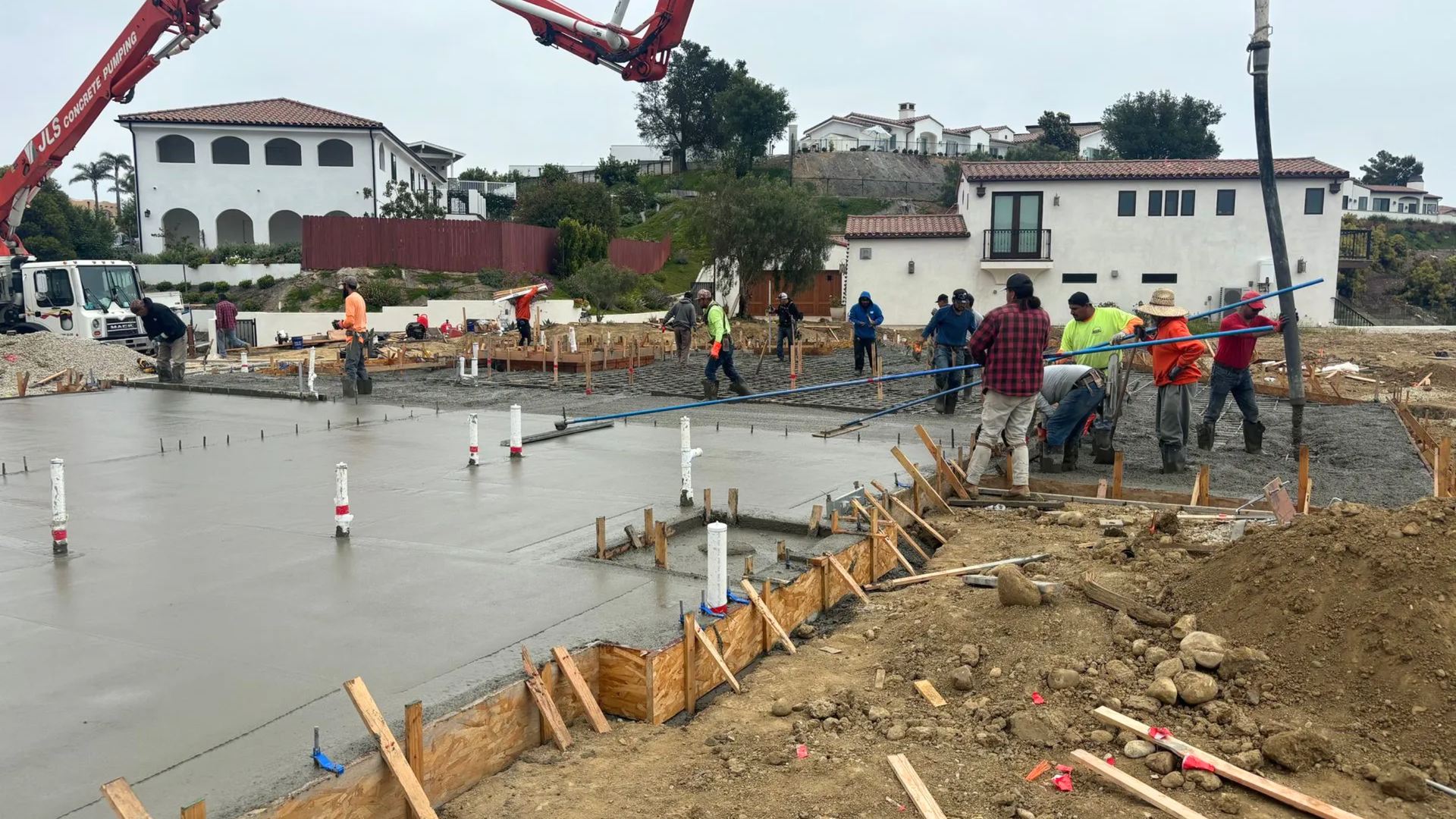
When the foundation is installed correctly, the structure above it remains stable for decades. When it is not, problems such as cracks, uneven floors, and structural movement can appear over time.
In Southern California, foundations must be designed to handle soil movement, drainage conditions, and structural loads. Understanding how foundations work helps homeowners plan construction projects more confidently and avoid costly problems later.
If you are planning several concrete improvements around your property, our guide to Residential Concrete Services in Southern California explains how foundations connect with driveways, patios, retaining walls, and other structural concrete work.
What a Concrete Foundation Does
A concrete foundation spreads the weight of a structure safely into the ground. Without this support, buildings can shift, settle unevenly, or develop structural stress over time.
A properly installed foundation helps:
- Support the full weight of the building
- Keep floors level and stable
- Reduce structural movement caused by soil conditions
- Protect the structure from long-term settling
Because of its strength and durability, reinforced concrete is the most common foundation material used in residential construction.
Common Types of Concrete Foundations
Different foundation systems are used depending on the building design, soil conditions, and property layout.
Slab-on-Grade Foundations
Slab-on-grade foundations are the most common residential foundation type in Southern California.
In this system, concrete is poured directly onto a compacted base at ground level.
Key features include:
- Reinforced concrete slab
- Thickened edges to support structural walls
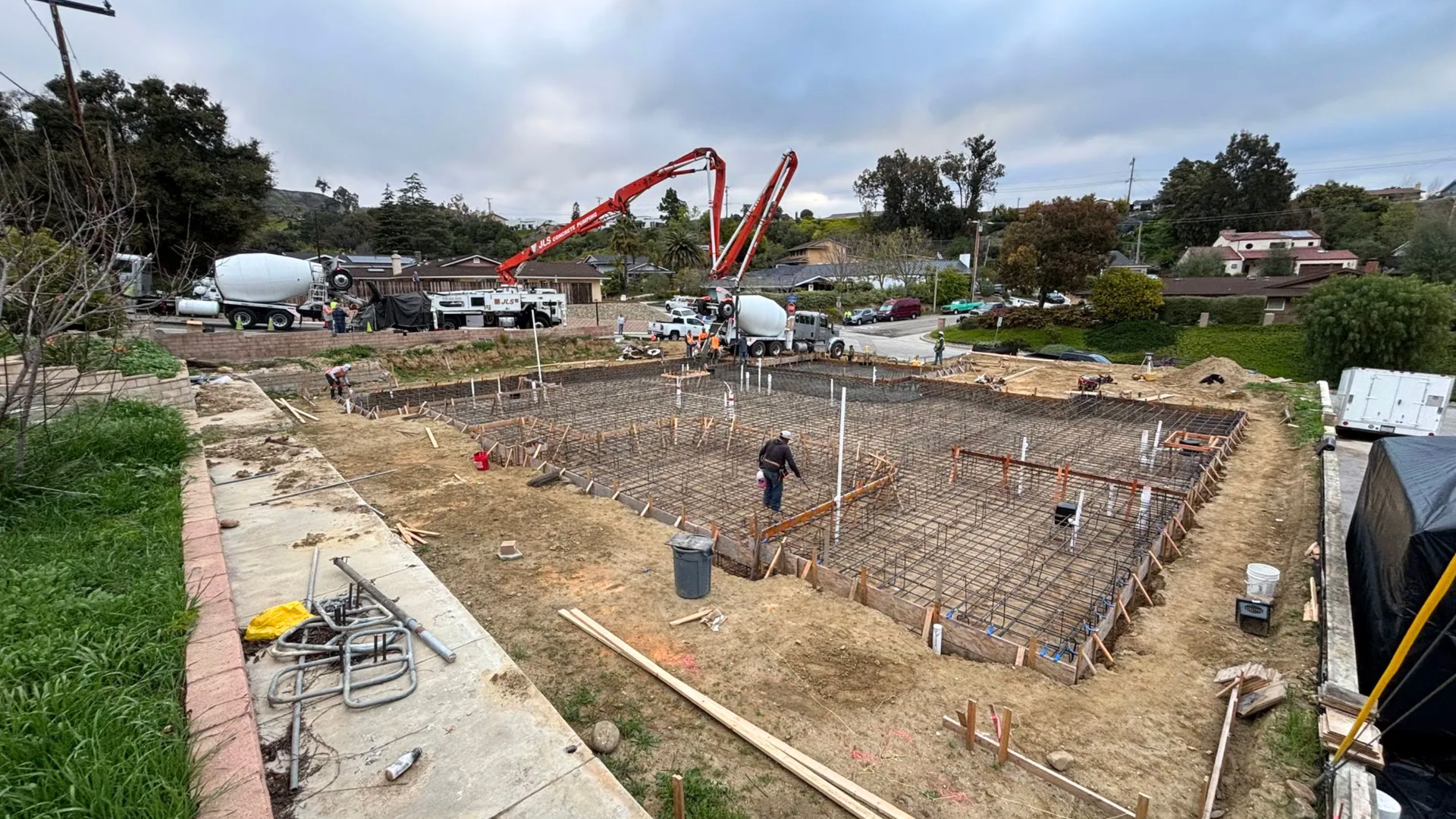
- Steel reinforcement throughout the slab
This foundation type is commonly used for:
- Houses
- ADUs
- Home additions
- Detached garages
Because the slab sits directly on the ground, proper soil preparation and drainage are extremely important.
Stem Wall Foundations
Stem wall foundations elevate the structure slightly above ground level.
The system includes:
- Concrete footings below the surface
- Short vertical concrete walls
- A slab poured within the perimeter walls
Stem wall foundations are often used when:
- The property has uneven terrain
- Elevation improves drainage
- Additional structural support is required
They are commonly used for hillside homes across Southern California.
Pier and Beam Foundations
Pier and beam foundations support a structure using concrete piers placed beneath the building.
Beams span between the piers and support the floor system above.
This foundation system is used when:
- Soil movement is a concern
- Crawl space access is required
- Ventilation beneath the building is beneficial
Although less common than slab foundations, they can be useful in certain construction conditions.
Concrete Slabs Used for Residential Projects
Concrete slabs are used in many residential applications beyond the main house foundation.
Common slab projects include:
- Garage floors
- ADU foundations
- Storage shed bases
- Outdoor kitchen pads
- Equipment slabs
Each slab must be designed according to the weight it will support and the conditions of the site.
Many homeowners also install outdoor living spaces at the same time as foundation work. For example, patio slabs are often installed alongside structural slabs. Our guide to Concrete Patios in Southern California explains how patio slabs are installed and finished for outdoor spaces.
Concrete Slab Thickness Guide
The thickness of a concrete slab depends on how the surface will be used.
Typical Residential Concrete Slab Thickness
| Project Type | Typical Thickness |
|---|---|
| Walkways | 4 inches |
| Patio slabs | 4 inches |
| Garage floors | 4–6 inches |
| Structural foundation slabs | 5–6 inches |
| Equipment pads | 6–8 inches |
Heavier loads require thicker slabs and additional reinforcement.
Contractors evaluate soil conditions and structural loads before determining the final slab design.
Why Reinforcement Matters in Concrete Foundations
Concrete is strong under compression but can crack when placed under tension. Reinforcement helps balance these forces and improves structural strength.
Two common reinforcement systems are used in residential foundations.
Steel Rebar
Rebar strengthens concrete and helps distribute structural loads evenly.
It is commonly used in:
- Structural foundations
- Garage slabs
- Load-bearing surfaces
Proper rebar placement inside the slab is critical for performance.
Wire Mesh
Wire mesh reinforcement helps control surface cracking and improves slab durability.
The reinforcement method used depends on:
- Slab thickness
- Structural load requirements
- Soil conditions
- Local building codes
Site Preparation Before Pouring a Foundation
One of the most important steps in foundation construction happens before the concrete is poured.
If the ground beneath the slab is unstable, the foundation may settle or shift over time.
Typical preparation steps include:
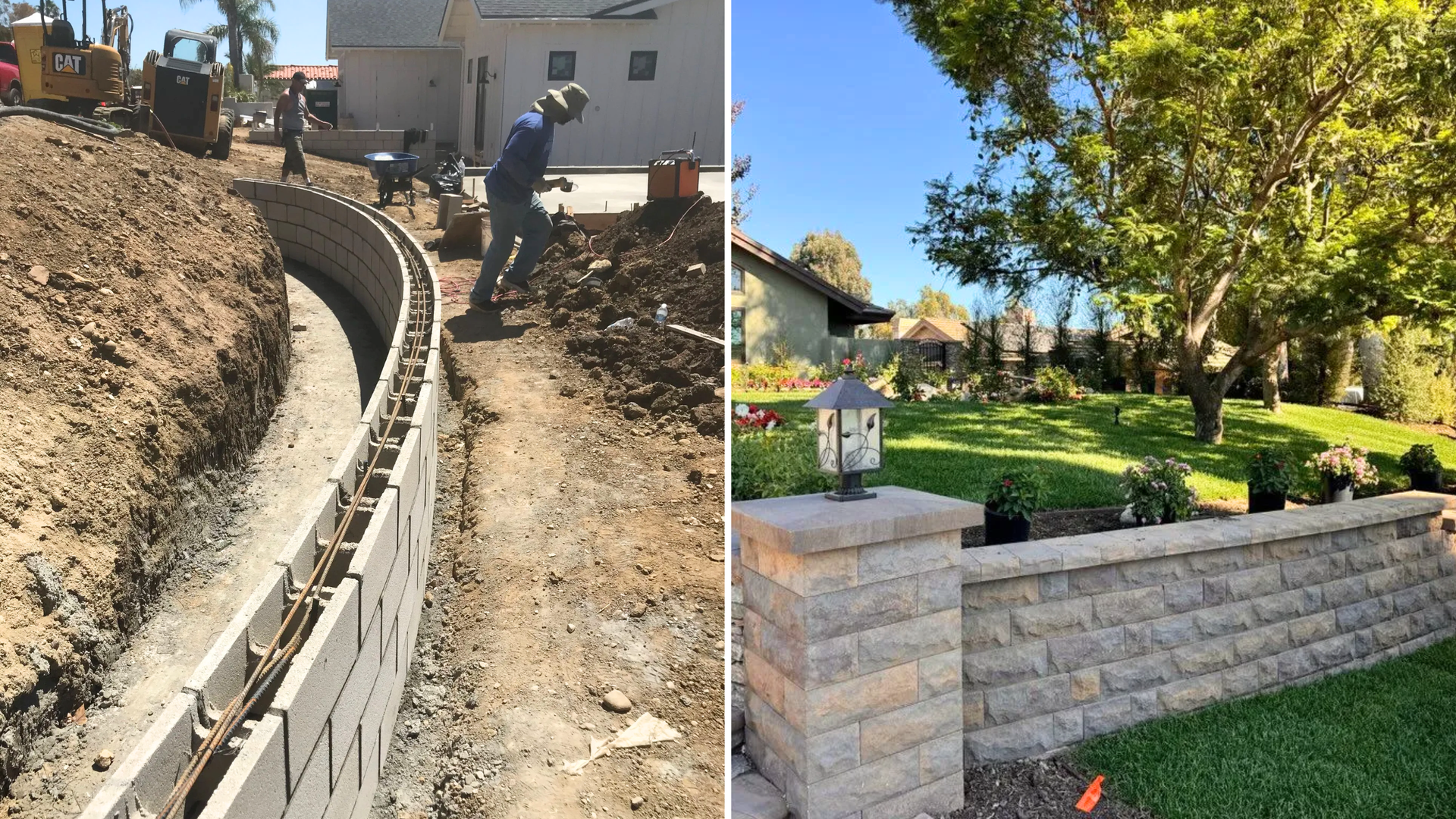
- Excavating the construction area
- Compacting soil or base material
- Installing a gravel base layer
- Adding moisture barriers when necessary
A compacted gravel base improves drainage and reduces the risk of soil movement beneath the slab.
Skipping proper preparation is one of the most common causes of foundation problems.
Soil Conditions in Southern California
Soil conditions vary widely throughout Southern California.
Some areas contain clay soils that expand when wet and shrink when dry. This expansion can place pressure on foundations and cause structural stress.
Foundation design must account for:
- Soil composition
- Moisture levels
- Drainage conditions
Contractors often evaluate soil conditions before construction begins to determine the appropriate foundation design.
Concrete Foundation Cost in Southern California
Foundation costs depend on several factors including project size, soil conditions, reinforcement requirements, and site accessibility.
Average Concrete Foundation Costs
| Project Type | Cost Per Square Foot |
|---|---|
| Basic slab foundation | $8 – $14 |
| Reinforced structural slab | $12 – $18 |
| Garage slab | $10 – $16 |
| ADU foundation | $14 – $20 |
Costs may increase when:
- Excavation is required
- Soil preparation is extensive
- Structural engineering is needed
- Site access is limited
Every project should be evaluated individually to determine accurate pricing.
How Foundations Connect With Driveways and Outdoor Surfaces
Many residential projects involve several concrete surfaces that work together.
For example:
- Garage slabs connect directly to driveways
- Walkways may run alongside foundation edges
- Patios may extend from the structural slab area
Planning these surfaces together helps ensure proper alignment and drainage.
If your project includes driveway installation, our guide to Concrete Driveways in Southern California explains how driveway slabs are designed to handle vehicle weight and integrate with foundation construction.
How Long Concrete Foundations Last
Concrete foundations are designed to perform for decades.
When installed correctly, they can last more than 50 years.
Typical Foundation Lifespan
| Foundation Type | Expected Lifespan |
|---|---|
| Residential slab foundation | 50+ years |
| Reinforced structural foundation | 60+ years |
| Garage slabs | 40–60 years |
Longevity depends on:
- Quality of installation
- Reinforcement placement
- Soil stability
- Drainage conditions
Most foundation problems occur when preparation or reinforcement is inadequate.
Signs a Foundation May Need Inspection
Homeowners should watch for warning signs that may indicate foundation movement.
Common signs include:
- Large cracks in walls or floors
- Doors or windows that no longer close properly
- Uneven flooring
- Visible cracks in concrete slabs
Small hairline cracks are common in concrete, but larger cracks should be inspected by professionals.
Maintaining a Concrete Foundation
Concrete foundations require very little maintenance, but good property care helps protect them.
Homeowners should:
- Maintain proper drainage around the property
- Avoid water accumulation near the foundation
- Monitor cracks in slabs or walls
- Ensure landscaping does not trap moisture against the structure
Routine inspections help identify potential issues early.
Planning a Concrete Foundation Project
Before starting a foundation project, homeowners should consider several important factors.
These include:
- The purpose of the structure
- Soil conditions on the property
- Drainage requirements
- Structural load expectations
Proper planning helps prevent construction delays and ensures the foundation performs well over time.
Final Thoughts
Concrete foundations and slabs support many of the structures found on residential properties. They provide the stability required for homes, garages, and outdoor buildings while protecting structures from shifting soil and structural stress.
Understanding how foundations work helps homeowners plan construction projects more confidently. Factors such as soil conditions, slab thickness, reinforcement, and drainage all play a role in how well a foundation performs over time.
When properly designed and installed, a reinforced concrete foundation can support a structure safely for decades.
If you are planning a new construction project, garage slab, ADU foundation, or other structural concrete work,
Stoneworks Construction Services
provides
residential concrete foundations and slab installation throughout Southern California, helping homeowners build stable, long-lasting structures.