Block Wall vs. Retaining Wall: What's the Difference and Which Do You Need?
If you've ever gotten a quote for a concrete or masonry wall and felt confused by the terminology, you're not alone. "Block wall" and "retaining wall" are two of the most commonly used terms in residential construction—and they're often used interchangeably, even though they refer to different things. Understanding the difference matters. It affects your design choices, your budget, whether you need a permit, and who you hire to build it.
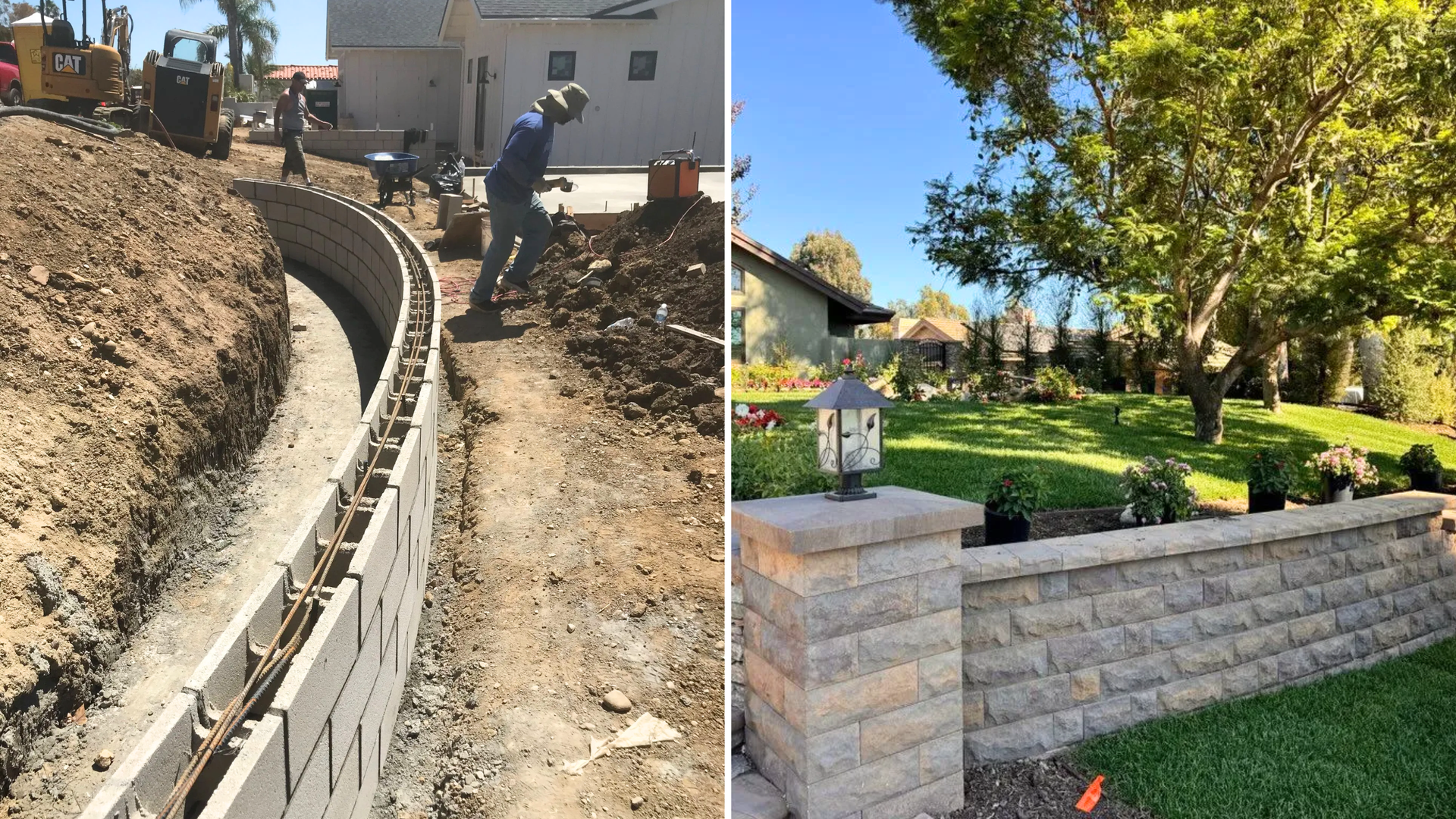
At Stoneworks Construction Services, we build both block walls and retaining walls across Thousand Oaks, Ventura County, and Santa Barbara County. In this guide, we'll break down what each type of wall is, how they're different, and how to figure out which one your property actually needs.
What Is a Block Wall?
A block wall—sometimes called a concrete block wall, CMU wall (concrete masonry unit), or cinder block wall—is a freestanding vertical structure built from interlocking concrete blocks. Block walls are primarily used to define boundaries, create privacy, divide spaces, or add a decorative element to a landscape. They sit on their own and are designed to stand upright without relying on soil pressure for support.
Common uses for block walls:
- Property line fencing and privacy walls
- Garden walls and landscape dividers
- Pool enclosures and backyard privacy screens
- Decorative walls for curb appeal
- Noise barriers along busy streets or neighbors
Block walls can be left as exposed concrete, stucco-coated, painted, or finished with stone veneer, depending on the aesthetic you're after. They range from a few feet tall to over eight feet for privacy applications, and they typically require a concrete footing poured below grade to keep them stable.
What Is a Retaining Wall?
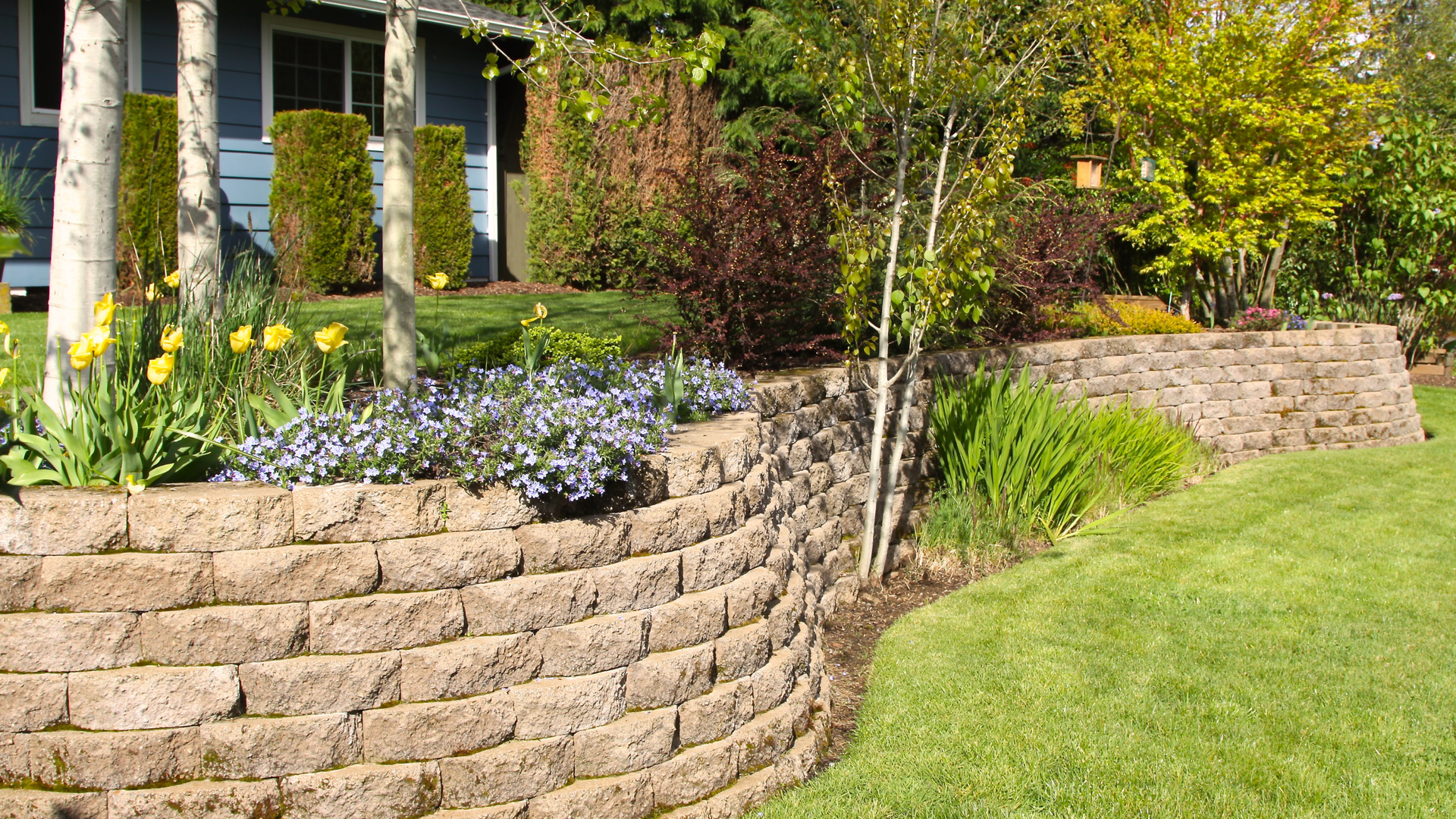
A retaining wall is an engineered structure designed to hold back—or "retain"—soil. Unlike a block wall, a retaining wall is built specifically to manage lateral earth pressure. It keeps soil from sliding, eroding, or collapsing downhill. Retaining walls are essential on sloped properties and hillside lots, which are extremely common throughout Thousand Oaks, Simi Valley, Ojai, and the surrounding Ventura County foothill communities.
Common uses for retaining walls:
- Holding back a hillside or slope behind a home
- Creating level terraces on a sloped lot for usable outdoor space
- Preventing soil erosion around driveways, patios, and walkways
- Supporting garden beds on a slope
- Stabilizing soil near a foundation or hardscape
Retaining walls must be carefully designed with drainage in mind. Without proper drainage, water builds up behind the wall and dramatically increases pressure on the structure—leading to leaning, cracking, or failure. This is why retaining wall projects over a certain height almost always require engineering review and a building permit in California.
Want a deeper look at retaining wall types, costs, and design options? We cover all of it in our complete guide: Retaining Walls in Southern California: Types, Costs, Design Options, and What Homeowners Should Know
Key Differences: Block Wall vs. Retaining Wall
Here's a side-by-side breakdown of the most important differences:
Purpose
A block wall stands on flat or near-flat ground and serves a visual or functional boundary purpose. A retaining wall is an active structural element—it's holding soil in place under constant pressure. This is the most fundamental difference and the one that drives every other decision.
Structural requirements
Block walls need a solid footing, but the engineering is relatively straightforward. Retaining walls must be designed to handle lateral earth pressure, which increases significantly with wall height and soil type. Taller retaining walls (typically over four feet in California) usually require a licensed engineer to stamp the plans.
Drainage
Block walls don't typically require drainage systems. Retaining walls almost always do—proper drainage is built into the wall through gravel backfill, weep holes, or a perforated drain pipe behind the wall. Skipping drainage on a retaining wall is one of the most common causes of premature failure.
Permit requirements
Shorter block walls may not require a permit, depending on height and jurisdiction. Retaining walls over a certain height—generally three to four feet in Ventura County—typically require a building permit and engineering review.
Materials
Both walls can be built from concrete masonry units (CMU block). However, retaining walls also commonly use poured concrete, segmental retaining wall block, natural stone, or timber. The material choice depends on the load the wall needs to support, the height, and the aesthetic.
Cost
Block walls generally cost less per linear foot than retaining walls of the same height, because retaining walls require more engineering, more material behind the wall (drainage aggregate), and often more labor-intensive installation. A basic block privacy wall might run $40–$80 per linear foot installed, while a reinforced retaining wall can run $60–$150 or more depending on height, site conditions, and materials.
Can a Block Wall Also Be a Retaining Wall?
Yes—and this is where the confusion usually comes from. A block wall can be built to retain soil, but only when it's specifically engineered for that purpose. A standard freestanding block wall is not designed to withstand lateral soil pressure. If you try to use a regular block wall to hold back a hillside or raised planter without proper engineering, drainage, and reinforcement, it will eventually fail—sometimes dramatically.
When soil retention is part of the project—even a small amount—the wall needs to be designed and built as a retaining wall from the start. This means deeper footings, proper drainage behind the wall, and likely rebar reinforcement through the block cells.
How to Know Which Type You Need
Here's a practical way to think through your project:
- You likely need a block wall if your lot is relatively flat and you're looking for privacy, a property boundary, a decorative garden element, or a fence-style barrier. The ground on both sides of the wall will be at roughly the same level.
- You likely need a retaining wall if your property has a slope, a hillside, or an area where soil could shift. You want to create a level terrace, protect a driveway from erosion, or prevent soil from sliding toward your home's foundation. The ground on one side of the wall will be noticeably higher than the other.
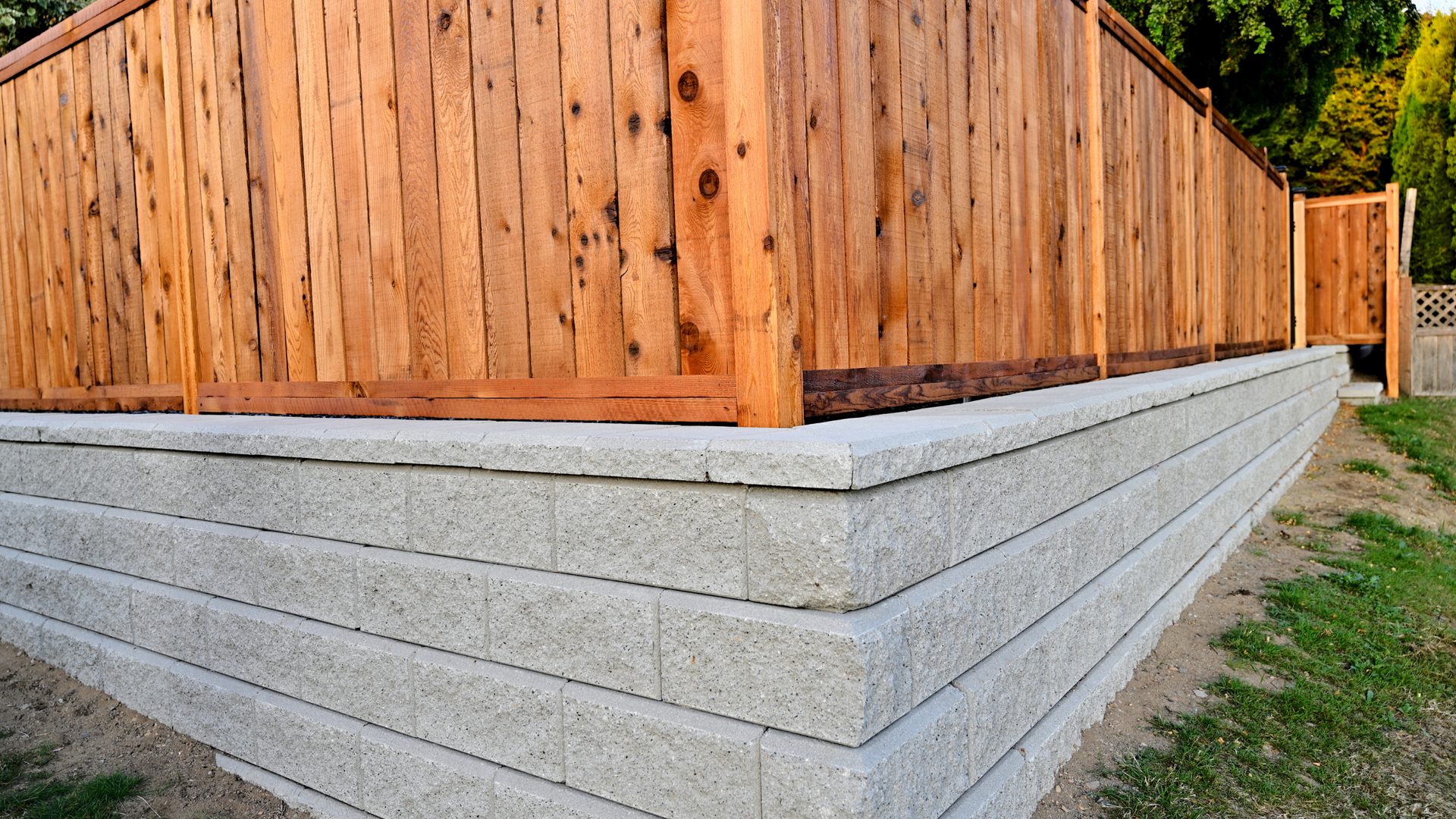
- You may need both if you're doing a larger landscaping or hardscaping project. For example, a tiered backyard might use a retaining wall to hold back the upper slope and a freestanding block wall further down the property for privacy or a pool enclosure.
What This Looks Like in Southern California
Southern California's geography makes this distinction especially relevant. Many homes in Thousand Oaks, Simi Valley, Moorpark, and Ojai sit on sloped or terraced lots. Hillside erosion is a real concern—especially after fire seasons or heavy rain events—and many homeowners don't realize their property needs a retaining wall until soil movement becomes visible.
At the same time, privacy walls are extremely common in Southern California because of the outdoor lifestyle. Homeowners want to enjoy their patios, pools, and outdoor spaces without feeling exposed to neighbors or street traffic. These projects often run alongside retaining wall work when a full backyard transformation is underway.
If you're planning a patio, outdoor living space, or full backyard renovation, you may also find our guides on
concrete patios in Southern California and
concrete walkways and sidewalks — both cover how wall work fits naturally into a larger project.
What the Installation Process Looks Like
For a block wall:
- We excavate and pour a concrete footing below grade for stability
- Concrete block is laid in courses with mortar, and rebar is run vertically through the block cells and grouted solid
- Caps are installed at the top for a finished look
- Optional finishes like stucco or stone veneer are applied if desired
For a retaining wall:
- Engineering plans are reviewed (required for taller walls) and permits are pulled
- Excavation is done at the base of the slope
- A reinforced footing is poured
- Wall material is installed (CMU, concrete, segmental block, etc.) with rebar reinforcement
- Drainage aggregate and a perforated drain pipe are installed behind the wall before backfill
- Backfill is compacted in lifts to avoid overloading the new wall
- Final grading and cleanup
Both projects are managed by a dedicated project manager at Stoneworks, and we handle the permitting process on your behalf where required.
Questions to Ask Before You Get a Quote
When you call a contractor for a wall project, a few questions will help you understand what you're actually getting:
- Is this wall designed to retain soil, or is it purely freestanding?
- Will drainage be installed behind the wall, and what type?
- Is a permit required for this height and location?
- What footing depth are you using?
- Will rebar be used, and where?
- Does the quote include backfill and final grading?
Any reputable contractor should be able to answer these without hesitation. If they can't—or if drainage never comes up when discussing a retaining wall—that's a warning sign.
How Stoneworks Approaches Wall Projects
At Stoneworks Construction Services, we handle block walls and retaining walls throughout Ventura and Santa Barbara Counties. Every project starts with a site visit so we can assess your grade, soil conditions, and what the wall actually needs to do. We don't quote a block wall price for a project that requires retaining engineering—and we don't add unnecessary complexity to a straightforward privacy wall.
We're licensed and insured, we assign a dedicated project manager to every job, and every project is backed by a 3-year workmanship warranty. If you're not sure which type of wall you need, a site visit will clear it up quickly.
Ready to Get Started?
Whether you need a privacy wall for your backyard or a retaining wall to stabilize a hillside, Stoneworks Construction Services can help you figure out exactly what the project requires—and build it right the first time. We serve Thousand Oaks, Camarillo, Simi Valley, Moorpark, Ventura, Ojai, Westlake Village, and surrounding communities.